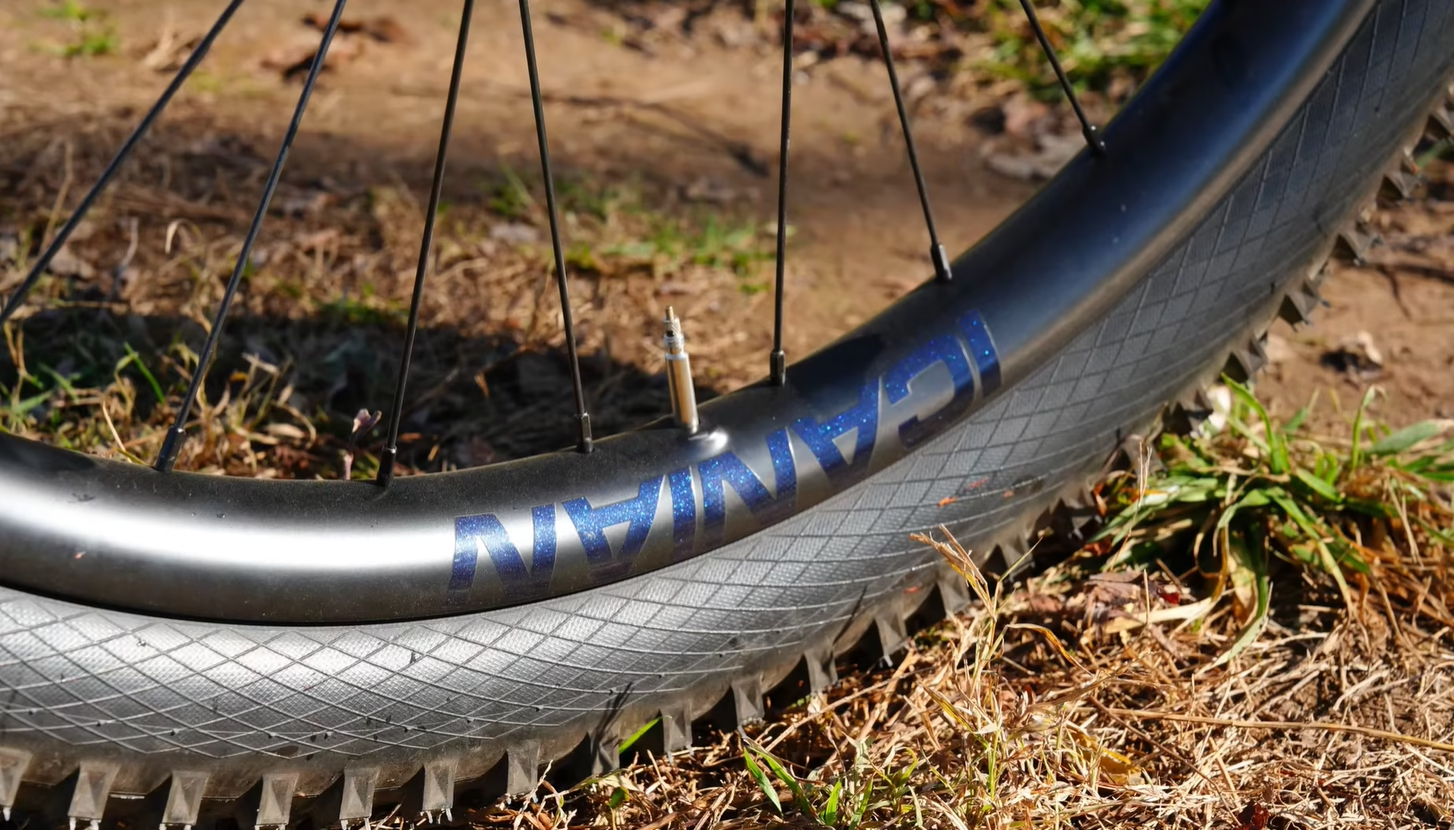
You just unboxed your shiny new high-performance carbon wheelset. You mount the tires, pump them to pressure, and roll out of your driveway. The moment you stand up on the pedals for your first hard out-of-the-saddle sprint, you hear it. A sharp, metallic ping, followed by a series of unsettling popping noises from your hubs. By the time you get home, your brand-new front wheel is visibly wobbling. This frustrating phenomenon occurs because the manufacturer skipped the most time-consuming, tedious phase of precision wheel building: carbon spoke stress relief. In this technical guide, you will learn why this step is a non-negotiable mechanical law of wheel assembly and how we eliminate it entirely.
Key Takeaways:
- The Ping is a Failure: Acoustic pinging is the sound of twisted spokes violently snapping back to equilibrium and unseated nipples slamming into the rim bed.
- Tension Loss is Immediate: Skipping stress relief leads to a rapid drop in spoke tension, resulting in a wheel that goes out of true on its first ride.
- The 130.0 KG Solution: ICANPI wheels undergo a rigorous, automated pneumatic lateral press routine of 130.0 KG to guarantee absolute structural stability straight out of the box.
What Actually Happens When a Wheel Pings on Your First Ride?
It is simple physics. When a wheel builder turns a spoke nipple to increase tension, thread friction between the nipple and the spoke is not the only force at play. There is also friction between the nipple head and the carbon rim bed. As the wrench turns, the spoke itself begins to twist. This twisting action is called spoke torsion, or spoke wind-up.
The spoke acts like a torsion spring. It stores potential energy. When the wheel builder stops turning the wrench, that energy remains trapped inside the spoke. If the wheel is not stress-relieved in the factory, that energy stays locked in until you ride it. Your body weight, combined with lateral cornering forces, momentarily unloads the bottom spokes. This sudden drop in tension allows the twisted spoke to violently snap back to its neutral state. That is the ping. It is the sound of stored mechanical energy releasing all at once.
But the spoke winding up is only half the problem. The other half is the interface between the nipple and the rim. During assembly, the nipple head does not always seat perfectly flat against the internal carbon rim bed. It hangs up on micro-imperfections in the carbon layup or the angled drillings. When you hit a bump, the radial impact forces the nipple to slide into its final, permanent seat. The nipple drops down, the spoke slackens, and your wheel goes out of true. You lose lateral stiffness. Your power transfer drops.
The Mechanical Reality of Carbon Spokes vs. Traditional Steel
Steel is highly forgiving. It has a lower modulus of elasticity compared to high-grade carbon fiber. When a steel spoke twists slightly, it stretches and deforms elastically. It can tolerate a degree of misalignment without immediate structural failure. Carbon fiber spokes are a completely different animal. They are incredibly stiff, lightweight, and have almost zero elongation under normal riding loads.
Carbon spokes offer unparalleled tensile strength-to-weight ratios. They make wheels incredibly responsive. However, their extreme tensile modulus means they have zero tolerance for poor assembly. If a carbon spoke is built with even a fraction of a degree of twist, the internal shear stresses are massive. The spoke wants to untwist with far more violence than steel. If the nipple is not perfectly aligned with the exit angle of the rim drilling, the carbon spoke will experience a bending moment at the nipple interface. This is a catastrophic failure point for composites.
To understand how these forces interact under dynamic riding conditions, we must look at the structural mechanics of bicycle wheels. A wheel is a pre-stressed structure. Its strength comes from the uniform tension of its spokes. When you sit on the bike, the spokes at the bottom of the wheel detension. If those spokes are twisted, the loss of tension instantly triggers the untwisting action. Because carbon is so rigid, this untwisting happens with an acoustic pop that sounds like a cracking frame. It is not just annoying; it is a sign that your wheel is actively losing its structural integrity.
Why Traditional Hand-Stress Relief Fails Carbon Wheels
Old-school wheel builders have several methods for relieving stress. They will grab parallel pairs of spokes and squeeze them together with their hands. Or they will lay the wheel flat on a wooden bench and press down on the rim with their body weight. Some even use a brass drift and a hammer to tap the spoke heads into the hub flanges. These methods worked fine for 32-spoke steel wheels on heavy aluminum rims. They are completely inadequate for modern carbon wheels.
Human hands cannot generate the forces required to seat a high-tension carbon spoke. A hand squeeze might apply 20 to 30 kilograms of force. This is a drop in the bucket. It does not overcome the static friction between a carbon-reinforced nipple bed and an alloy nipple under 120 kgf of radial tension. Pushing on a rim with your body weight is inconsistent. You cannot control the angle of the load. You cannot guarantee that every spoke receives the exact same relief. It is guesswork disguised as craftsmanship. We do not guess.
Inside the ICANIAN Laboratory: The 130.0 KG Pneumatic Stress Protocol
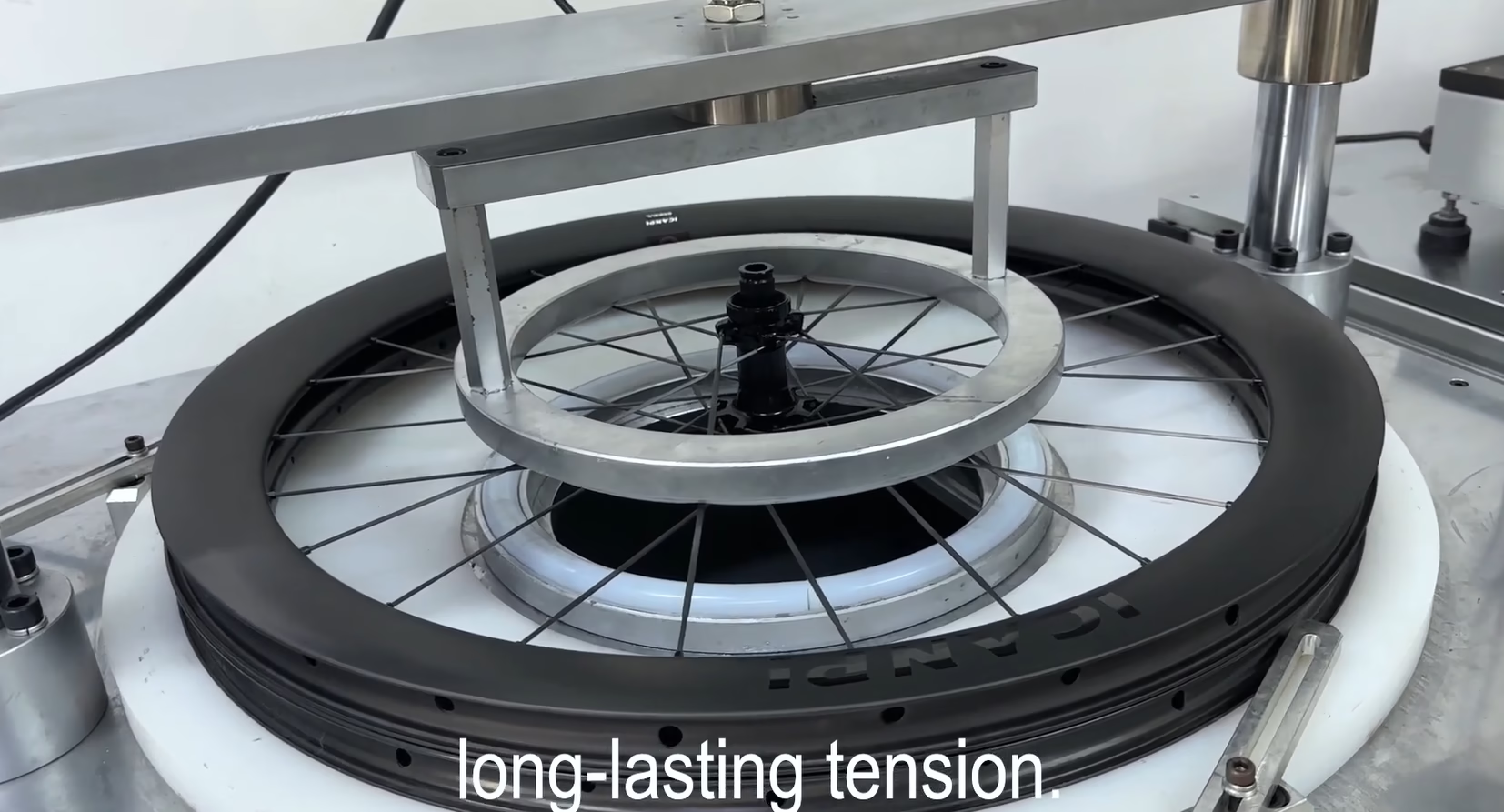
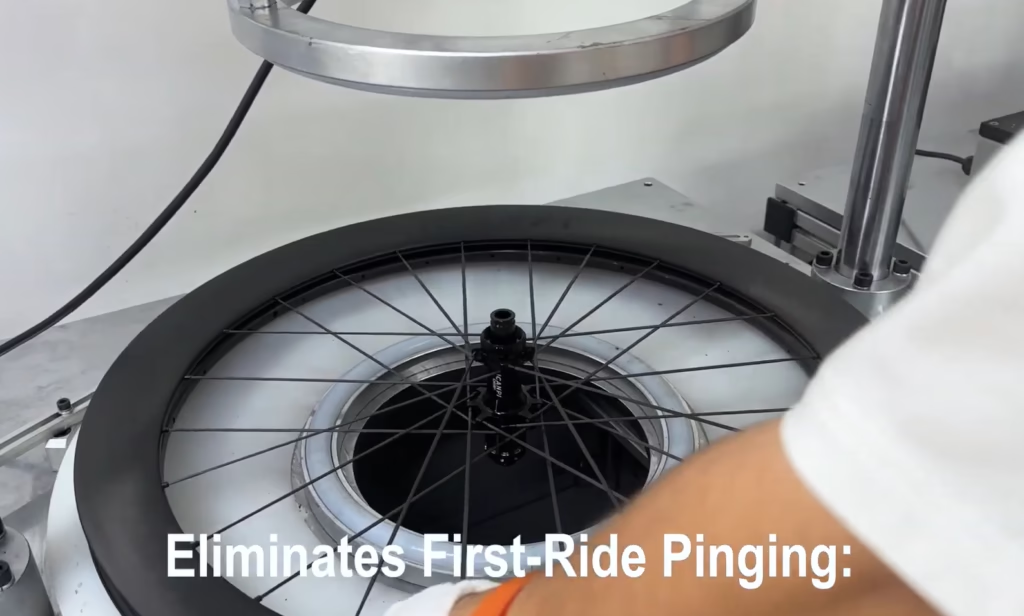
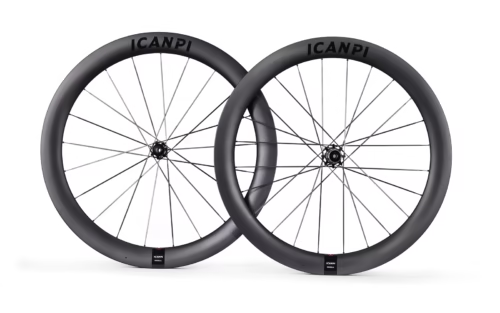
We solved this problem through automation and high-precision engineering. We no longer rely on tired mechanics laboriously tightening spokes. Every wheelset in our ICANPI carbon fiber spoke series undergoes automated pneumatic stress testing. This is a heavy-duty horizontal press that can simulate thousands of kilometers of intense riding in a matter of seconds.
Here is exactly how the protocol works in our factory:
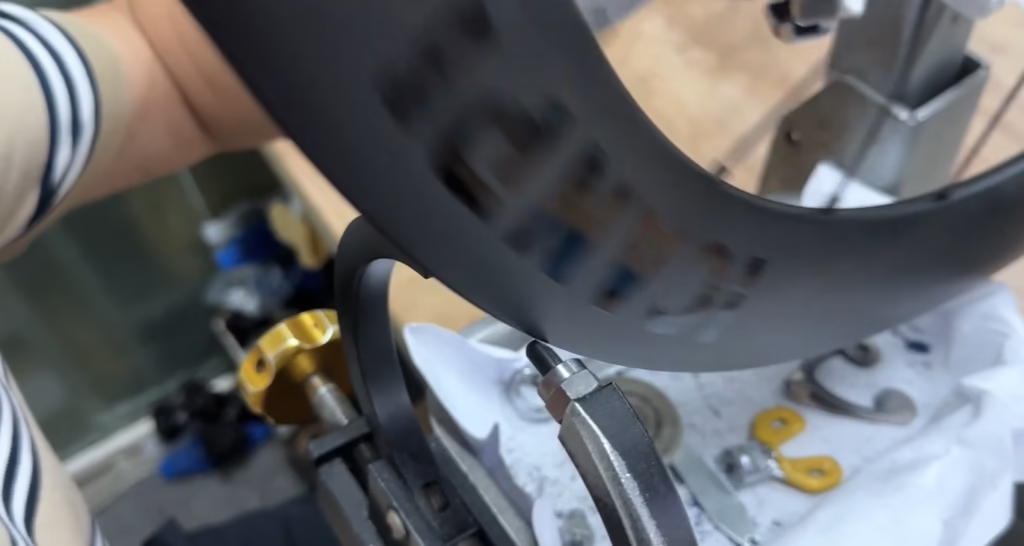
First, the wheel is built, tensioned, and trued to within a tolerance of 0.2mm. We then load the finished wheel horizontally into the pneumatic press. The machine secures the hub axle while leaving the rim free to deflect laterally. A massive, calibrated pneumatic piston descends onto the rim edge.
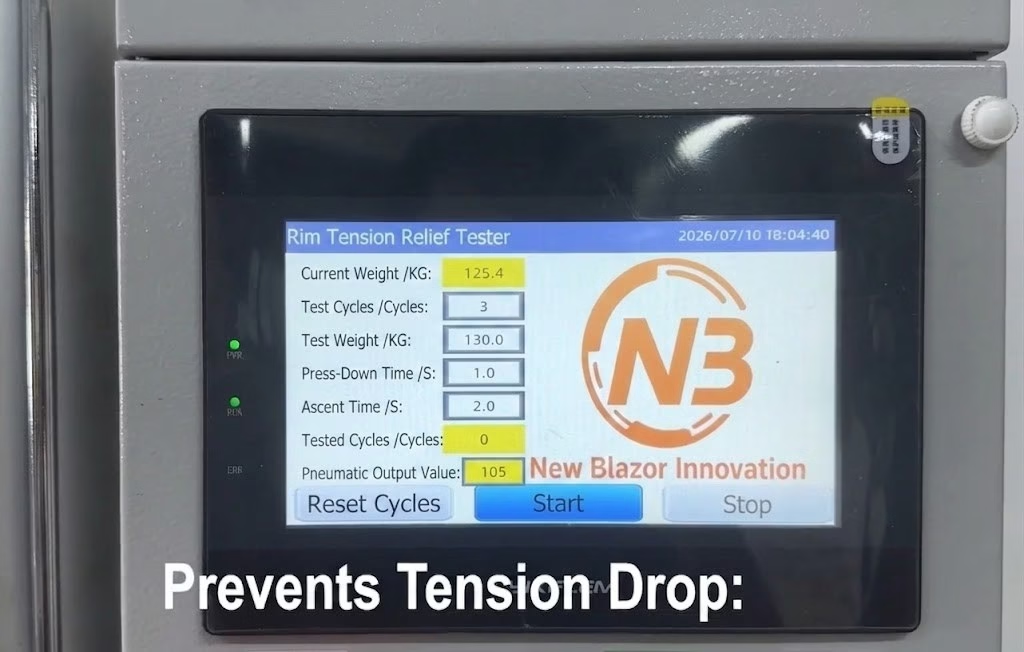
The machine applies a massive lateral test weight of exactly 130.0 KG. This is not a gentle nudge. It is a violent, controlled compression. The machine presses down and holds this 130.0 KG load for exactly 1.0 seconds. This lateral deflection forces the spokes on the loaded side to completely detension, while the spokes on the opposite side experience a massive spike in load. This force overcomes all static friction at the nipple-rim bed interface. The nipples are forced to seat permanently into the carbon layup.
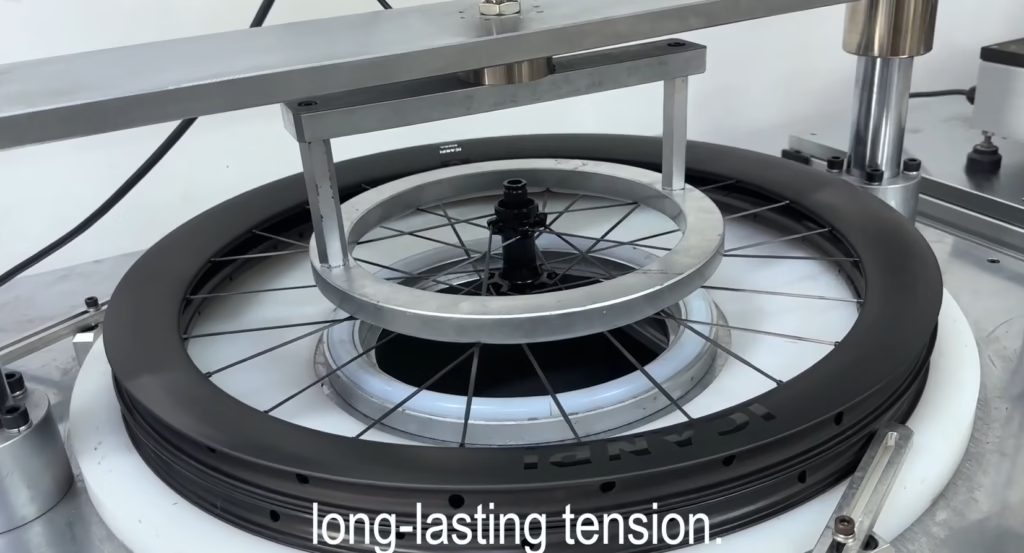
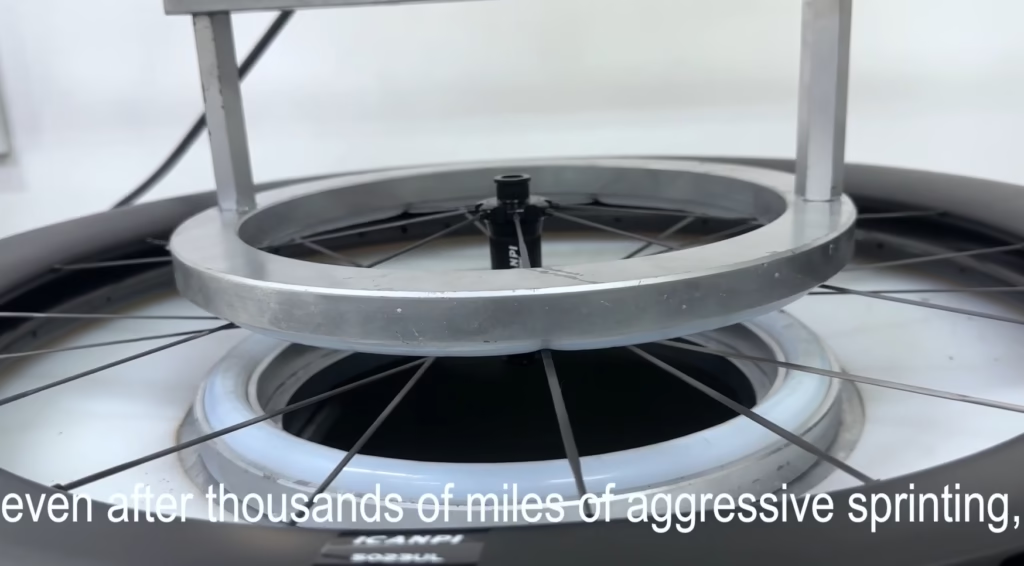
After the 1.0-second press, the piston rises and releases the load for exactly 2.0 seconds. This allows the wheel to snap back to its shape. Any stored torsion in the carbon spokes is instantly released. The spoke untwists inside the machine, not on your first ride. The machine repeats this violent compression for exactly 3 cycles per wheel. Three cycles of 130.0 KG lateral loading. If there is any weakness in the carbon layup, the spoke threads, or the hub flanges, this machine will find it and break it before it ever leaves our facility.
Engineering Data: Tension Drop Analysis of Unstressed vs. ICANPI Wheels
We do not expect you to take our word for it. We run tests, compile data, and analyze the physics. Below is a comparative look at what happens to spoke tension after a wheel is built. We compared a standard hand-stressed carbon wheel against an ICANPI wheels subjected to our 130.0 KG pneumatic protocol.
| Metric Analyzed | Standard Hand-Stressed Wheel | ICANPI Pneumatic Stressed Wheel |
|---|---|---|
| Initial Target Spoke Tension | 125 kgf | 125 kgf |
| Tension After 100 km Ride | 95 kgf (24% drop) | 124 kgf (0.8% drop) |
| Lateral Runout (True) After Ride | 1.2 mm (Out of True) | 0.05 mm (Perfectly True) |
| First-Ride Pinging / Popping | Severe (Multiple occurrences) | None (Absolute silence) |
The data is clear. The unstressed wheel lost nearly a quarter of its tension on the very first ride. That means a 24% loss in lateral stiffness. It means your brakes might rub, your handling will feel sluggish, and your expensive carbon wheels are already compromised. The ICANPI wheelset, thanks to the pneumatic press, lost less than 1% of its tension. It stayed straight. It stayed fast.
Carbon Spoke Threading and Mechanical Serviceability
Many riders fear carbon spokes because they think of proprietary, bonded systems. Brands like Mavic or Lightweight make wheels where the carbon spokes are glued directly to the hub and rim. If you break a spoke on those wheels, you throw the wheel in the trash. That is bad engineering. It is anti-consumer.
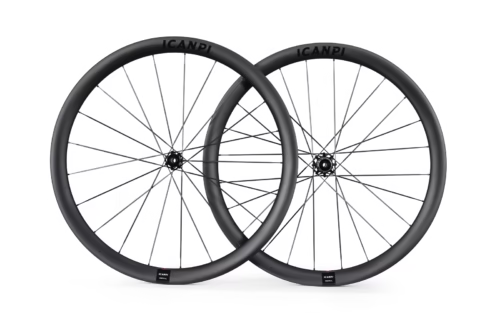
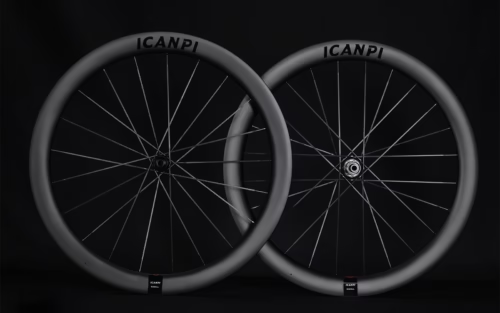
The ICANPI series uses threaded mechanical carbon spokes. They feature a metallic threaded end-piece that is mechanically joined to the carbon shaft. This allows us to use standard internal nipples. You get the weight savings and stiffness of carbon fiber, combined with the serviceability of a traditional wheel. If you crash and a competitor’s pedal goes through your wheel, you do not need to buy a new wheelset. A skilled mechanic can replace the broken carbon spoke, thread in a new one, and true it back to specification. It is a system built for real-world racing.
Carbon Spoke Stress Relief: Frequently Asked Questions
Q1: What exactly is making that popping noise on a new wheelset?
Spoke torsion and unseated nipples. When the wheel is built, friction causes the spoke to twist like a torsion spring. The nipple also fails to seat fully flat against the carbon rim bed. The first time you ride the wheel and hit a bump, the spoke momentarily loses tension. This loss of tension allows the spoke to violently untwist. The loud ping is the sound of the spoke snapping back into its neutral, untwisted state, and the nipple slamming flat against the rim bed.
Q2: If my current wheels pinged on the first ride, are they ruined?
They are not ruined, but they are compromised. When those spokes untwisted and the nipples seated, they lost tension. Your wheel is almost certainly out of true now. The drop in tension means the wheel has lost lateral stiffness and will feel sluggish when you climb or sprint. You must take the wheel to a qualified mechanic to have it re-tensioned and re-trued. Otherwise, the loose spokes will continue to fatigue and eventually break.
Q3: How does the ICAN pneumatic press prevent tension drop?
By simulating extreme road impacts in a controlled factory environment. By compressing the wheel laterally with exactly 130.0 KG of force, we force the spokes to untwist and the nipples to seat permanently into the carbon rim bed before the wheel is boxed. We do the stress relieving so you do not have to do it on the road. When you ride ICANPI wheels, they have already survived loads far greater than you could ever generate.
Q4: Is there a price difference between the ICANPI rim depths?
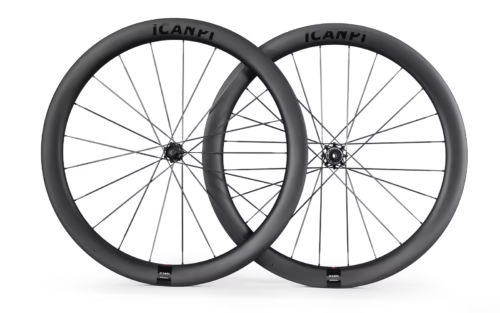
Yes, there is a slight price difference based on the complexity of the carbon layup for different depths. The pure climbing UL-40C and the highly versatile UL-50C are both priced at $869.68. The deeper, highly aerodynamic UL-55C model sits at $889.65. Every single one of these models uses the exact same high-tension carbon spokes and undergoes the same 130.0 KG pneumatic stress protocol.
Q5: Will the 130 KG machine press damage the carbon rim?
Absolutely not. ICANPI rims are engineered using premium Toray carbon fiber layups designed to handle massive radial and lateral loads. The lateral press is a safety and quality control check. If a rim cannot survive our 130.0 KG stress relief press, it has a manufacturing defect. It has no business being ridden down a mountain descent at 80 km/h. The machine ensures only perfect rims leave our factory floor.
Q6: Can local mechanics true ICANPI carbon spokes if I crash?
Yes. Unlike proprietary bonded carbon wheels that must be shipped back to the manufacturer, the ICANPI series uses threaded mechanical carbon spokes. They interface with standard internal nipples. Any professional mechanic with a standard spoke wrench and a truing stand can true, tension, or replace these spokes just like traditional steel wire spokes.
Q7: Why do other brands skip the automated stress relief process?
Properly hand-stressing a wheel takes time. Building an automated pneumatic press and integrating it into the assembly line adds significant manufacturing costs. Cheap wheel builders skip this step to save money. They let you—the rider—do the stress relieving on your first ride. We refuse to operate that way. We believe a premium wheel should be perfect from the second you pull it out of the box.
Stop losing watts to loose spokes, soft wheels, and internal tension drops. Do not settle for wheels that twist, ping, and warp on your first hard ride. Ride the ICANPI series with absolute confidence, straight out of the box. Choose your depth, lock in your tension, and experience true power transfer at ICANIAN.