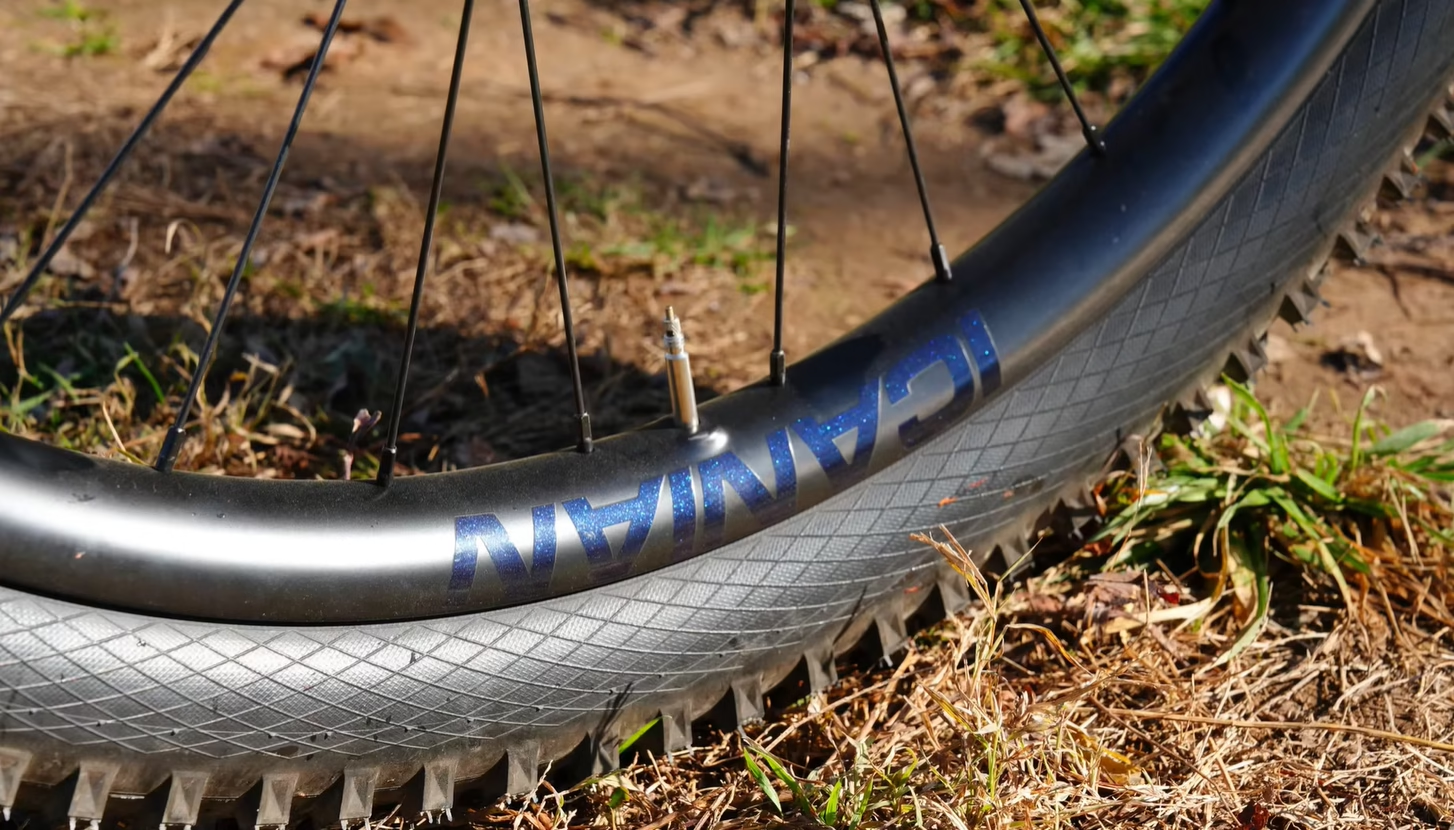
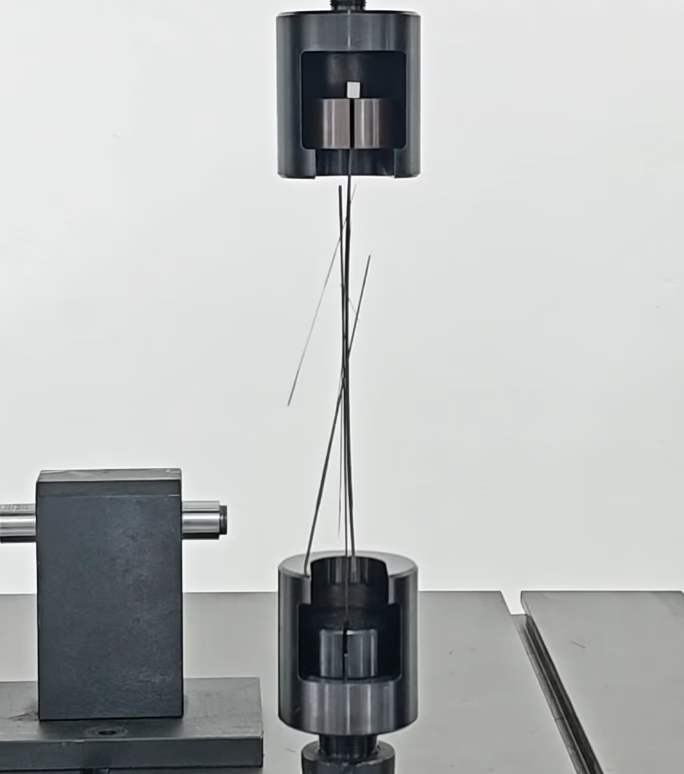
You’re pinned. Forty miles an hour, maybe more, through a blind rock garden. Dust plumes behind you. Every fiber of your being is screaming for traction, for speed, for that perfect line. Then it happens. That sickening, metallic thwack. A sound you know intimately. Metal on rock, sharp and unforgiving. It’s followed instantly by the dreaded hiss, that high-pitched, mocking whisper of air escaping. Your tire, once a meticulously tuned extension of your will, goes limp. Flaccid. Dead. Race over. Another DNF chalked up to a goddamn pinch flat.
I’ve seen it a thousand times. Been there myself more than I care to admit. Fifteen years in the pits, wrenching on World Cup rigs, and another decade before that smashing through every rock garden from Fort William to Val di Sole. Riders pushing the limits. Dropping PSI for that insane grip, that microscopic edge. And then, a square-edge hit, a rogue rock hidden in the dust, and your dreams are in tatters. A tiny, insidious tear in the casing. Two small, parallel slits. The classic snake bite. It’s a problem that’s plagued DH and enduro racing since tubeless became the standard. But 2026? This year, we’re finally putting that nightmare to bed. The solution isn’t a magic tire insert; it’s fundamental rim engineering. It’s ICANIAN’s Wide Flat Bead technology.
The Physics of Failure: Why Your Tubeless Still Bites
You’re running 22 PSI in a downhill casing tire. Good. That’s where the grip lives. But that low pressure also means less air volume, less resistance against extreme compression. You hit a square-edge rock, hard. Think about that impact. The wheel smashes down. The tire compresses violently, instantaneously. It’s trying to wrap around that rock, absorb the energy. But there’s a limit. The tire bottoms out. It compresses so hard, so fast, that the rubber casing gets trapped between the immovable force of the rock and the unyielding structure of your rim lip.
What happens then? A standard tubeless rim, even a modern hookless one, still has a relatively thin, sharp bead lip. Think of it like a dull knife edge. When that tire casing gets crushed between the rock and that knife-edge rim lip, the forces involved are immense. Concentrated. The rubber, even reinforced DH casing, has its limits. That thin lip, under extreme pressure, acts like a cutting tool. It literally slices through the tire casing. Not a puncture from a thorn, not a tear from a sharp shard of rock directly. No. It’s the rim itself, your own equipment, cutting its way through your tire. Two distinct, parallel cuts. A perfect snake bite. It’s a catastrophic failure of the system, not just the tire.
The Mechanics of the Slice
Imagine your tire casing as a flexible, woven structure. It’s designed to withstand incredible tension and abrasion. But it’s not designed to be pinched and cut by a hard, thin edge. The impact force isn’t distributed. It’s focused. That’s the critical point. A traditional rim bead, while strong, presents a narrow contact patch to the tire casing during a bottom-out event. All the energy of that impact, the entire weight of rider and bike, the velocity, it all funnels into that tiny line where the tire meets the rim lip. The tire material yields. It simply cannot withstand that concentrated, shearing force.
This isn’t about tire inserts completely solving the problem. Inserts help. They provide some damping, some protection, some resistance to the casing folding. But they don’t fundamentally change the geometry of the cutting edge. They just add another layer for the knife to cut through. It’s a bandage, not a cure. You’re still relying on a thin, vulnerable rim lip to protect your multi-hundred-dollar tire and your race run. That’s a gamble I’m not willing to take, and neither should you be.
The Solution: ICAN’s Wide Flat Bead Technology – A Blunt Mallet, Not a Knife
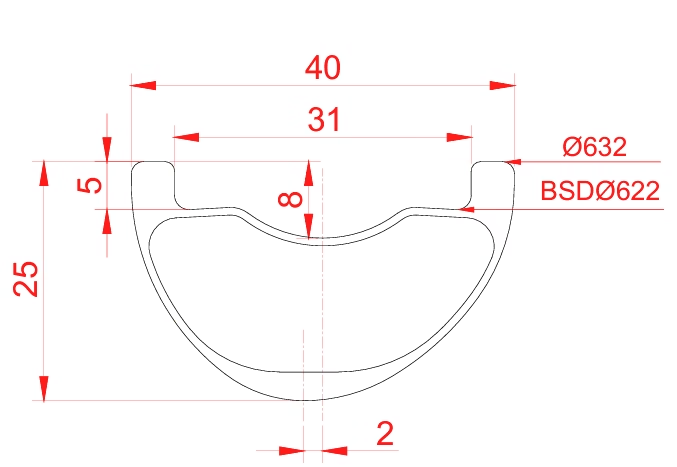
This is where real engineering steps in. ICANIAN saw the problem for what it was: a design flaw in the fundamental interface between tire and rim under extreme load. Their answer? Don’t just reinforce the carbon; redesign the crucial point of impact. They developed the Wide Flat Bead technology, and it’s a game-changer because it addresses the root cause of the pinch flat.
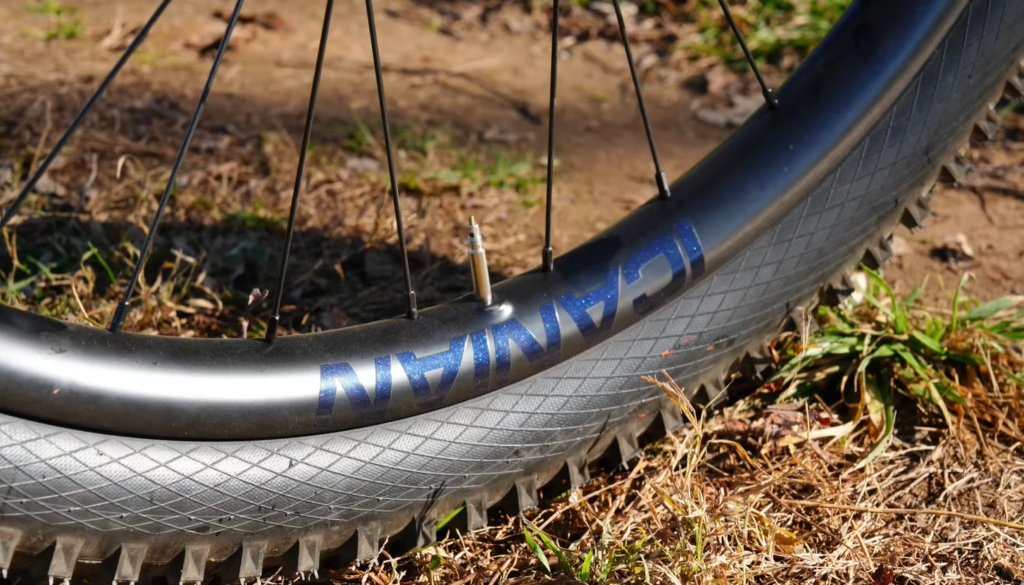
Forget the thin, sharp knife edge. ICANIAN’s Wide Flat Bead Carbon rim isn’t just wider; it’s flattened on top. Think about it. Instead of a narrow, angular lip, you’ve got a broad, blunt surface. When your tire bottoms out against a rock on these rims, the forces are entirely different. The impact energy, instead of being concentrated on a knife edge, is now distributed across a much wider surface area of the tire casing. It’s like hitting a nail with a hammer versus hitting it with a blunt mallet. The mallet spreads the force; the hammer concentrates it. The tire casing doesn’t get sliced; it gets compressed, but without the localized stress that causes failure.
Engineering for Impact: The ICAN DH40 Difference


This isn’t just a minor tweak. It’s a complete rethinking of rim architecture for high-impact scenarios. The DH40, ICAN’s flagship 29er downhill rim featuring this tech, thickens the rim wall at the bead to roughly 3.5mm. That’s significantly beefier than traditional rims. But it’s not just about raw thickness. It’s about the profile. The top surface of that bead is intentionally flattened. This wider, blunter contact point is the magic. During a severe bottom-out, the tire casing presses against a broad, impact-absorbing platform, not a shearing blade.
The physics are simple, yet profound. By distributing the load over a larger area, the pressure (force per unit area) exerted on any single point of the tire casing is drastically reduced. This means the rubber, even under extreme compression, stays intact. It deforms, it flexes, it takes the hit, but it doesn’t cut. The structural integrity of the tire casing remains uncompromised. This is pure, unadulterated engineering designed to keep you rolling when other rims would leave you stranded.
Beyond the Bead: The DH40’s Carbon DNA

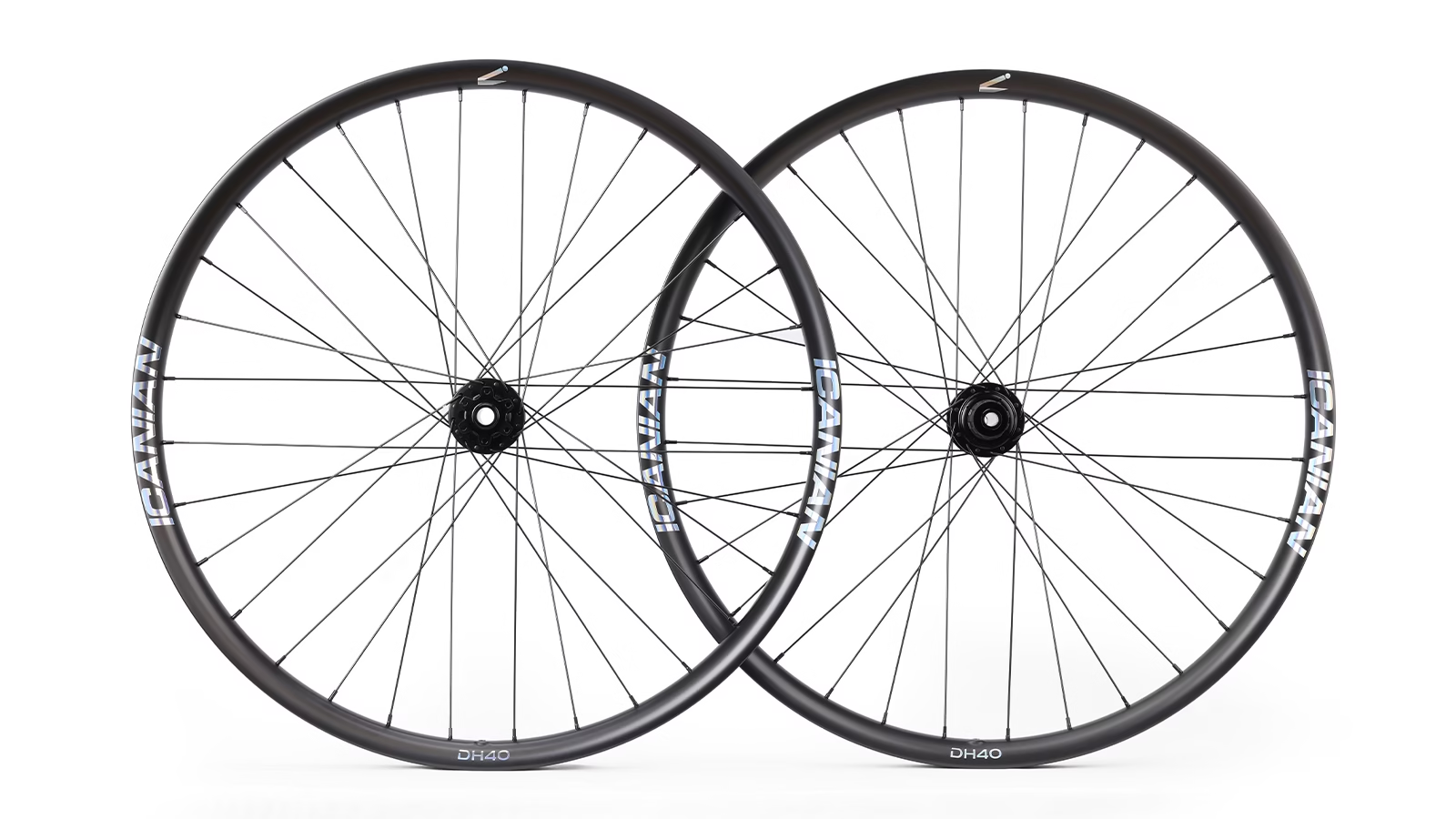

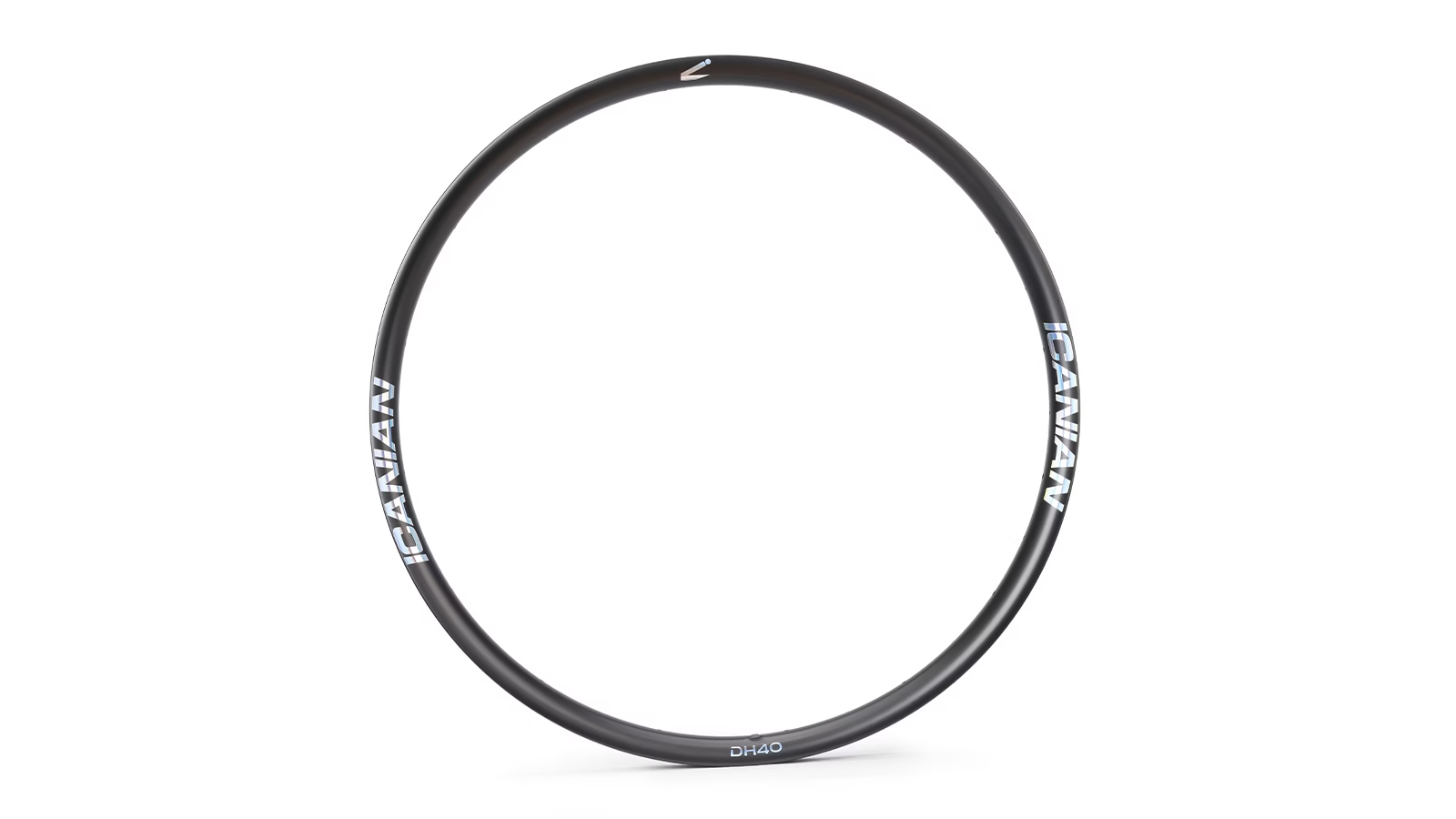
But the Wide Flat Bead is just one part of the DH40’s arsenal. This isn’t some flimsy trail rim rebranded for DH. ICAN engineered these 29er rims from the ground up for the brutal demands of downhill racing. They’re constructed with a high-TG (glass transition temperature) Toray carbon layup. What does that mean for you? It means the resin system and carbon fibers are designed to withstand extreme heat and impact without delaminating or deforming. This isn’t just about stiffness; it’s about sheer, unadulterated strength.
The carbon layup is heavily reinforced in critical zones. We’re talking around the spoke holes, where stress concentrations are highest, and, of course, around that crucial bead area. Every gram of carbon in the DH40 is placed with purpose. It’s built to survive direct square-edge impacts that would shatter lesser rims. You hit a rock, the rim flexes, absorbs, and bounces back. It doesn’t crack. It doesn’t explode. It holds its line, holds your tire, and keeps you on track to the finish line.
Think about the forces a DH rim endures. Landing huge gaps, slamming into compressions, plowing through rock gardens at speeds that blur your vision. The DH40 is built for that. It’s overbuilt, unapologetically so, because reliability IS speed in downhill. A few extra grams mean nothing if your wheel disintegrates on the first race stage. This rim is about crossing the finish line, not limping back to the pits with a broken wheel and a broken spirit.
The Real-World Edge: Ride Harder, Worry Less
So, what does this mean for you, the rider? It means confidence. Pure, unadulterated confidence. You can hit that rock garden with less hesitation. You can push harder into turns, knowing your tire won’t blow out from a rim strike. This isn’t just about preventing flats; it’s about unlocking a new level of aggression and precision in your riding.
You want to run lower pressures for maximum grip? Go for it. With the DH40’s Wide Flat Bead, you can comfortably drop your PSI down to levels that would have been suicide on traditional rims. We’re talking 22-24 PSI for maximum traction in the wet, over roots, through loose dirt. No more constant anxiety, no more holding back because you’re paranoid about that next “thwack.” The DH40 allows you to exploit every millimeter of your tire’s performance without the constant fear of catastrophic failure.
And what about those heavy tire inserts? CushCore, Rimpact, whatever your flavor. They’re good. They help. But they add significant rotational weight. With the DH40, many racers are finding they can ditch the heaviest inserts, or at least run lighter versions. The combined protection of the DH40’s wide bead and a proper Downhill-casing tire often provides enough protection. Think about the rotational weight savings. That’s faster acceleration, faster braking, less unsprung mass fighting you through rough terrain. Every gram matters when you’re chasing tenths of a second.
This technology isn’t just preventing flats; it’s making you faster. It’s giving you an edge. It’s reducing DNF’s, saving you money on destroyed tires, and, most importantly, keeping you in the race. No more standing on the side of the track, watching your competitors fly by, while you’re wrestling with a torn casing.
The Future is Here, And It’s Flat
The evolution of DH tech has always been about pushing boundaries. Lighter bikes, better suspension, more aggressive geometry. But often, the fundamental points of failure remain. The pinch flat has been that persistent Achilles’ heel. It’s a simple problem, but it required a sophisticated, ground-up engineering solution. ICAN delivered. This isn’t a gimmick. It’s a fundamental shift in how rims are designed to interact with tires under extreme load. It’s a direct, effective countermeasure to the most frustrating mechanical failure in downhill and enduro racing.
For years, we’ve been patching the problem. Adding inserts, running higher pressures than ideal, sacrificing grip for reliability. That era is over. The Wide Flat Bead technology, especially embodied in the ICAN DH40, represents a new standard. It’s about maximizing performance without compromising durability. It’s about riding with absolute commitment, knowing your equipment won’t betray you.
FAQ
Q1: What exactly causes a “snake bite” pinch flat on tubeless tires?
Answer: Bottoming out. Your tire compresses fully against a square-edge rock, and the thin lip of a standard rim crushes and slices the tire casing. Two holes. Snake bite.
Q2: How does the ICAN Wide Flat Bead prevent this?
Answer: By thickening the rim wall to roughly 3.5mm and flattening the top profile. During a massive compression, this wider surface distributes the impact force, preventing the rim from cutting through the rubber.
Q3: Do I still need to run heavy tire inserts (like CushCore) with Wide Flat Bead rims?
Answer: It depends on your riding style, but many racers are dropping heavy inserts. The combination of the DH40’s wide bead and a proper Downhill-casing tire provides enough protection, saving you massive rotational weight.
Q4: Will a thicker rim wall affect how my tubeless tire seats?
Answer: No. The internal channel and bead seat are still precisely machined. You get the exact same airtight tubeless seal, just with a massively overbuilt upper wall for impact protection.
Q5: Can the ICAN DH40 carbon rim survive direct rock strikes?
Answer: Yes. ICAN engineered a high-TG Toray carbon layup specifically for the DH40. It is heavily reinforced around the spoke holes and the bead, built purely to take World Cup-level abuse.
Q6: Are these wide-bead DH rims noticeably heavier than standard enduro rims?
Answer: They are slightly heavier than standard trail rims, yes. But in downhill, saving 50 grams means absolutely nothing if your rim cracks on the first stage. Reliability is speed.
Q7: What tire pressures can I safely run with the DH40 wheelset?
Answer: Because the wide flat bead protects your casing, aggressive riders can comfortably drop down to 22-24 PSI for maximum traction in the wet, without the constant anxiety of a catastrophic pinch flat.
Stop ruining your race weekends with fragile rims. Stop accepting the DNF. You train too hard, you invest too much, to have your run ended by a preventable pinch flat. Upgrade your rig. Get on the ICANIAN DH40 wide-bead wheelsets. Ride rock gardens with zero fear. Ride faster. Dominate.