Forget what you think you know about carbon spokes. The prevailing narrative is fragility. That a sharp impact, a pothole, a sudden jolt, will shatter them into dust. We’ve been building elite carbon wheels at ICANIAN for over a decade. We live in the lab. We measure everything. And the data tells a different story. This article dives deep into the raw telemetry from our ultimate tensile tests on the ICAN PI series carbon spokes, specifically for the 40C, 50C, and 55C models. You’ll learn exactly how much force these spokes can withstand, why that matters for your power transfer, and what it means for real-world riding. Prepare for blunt, data-driven truth.
Key Takeaways
- ICAN PI carbon spokes exceed typical steel spoke strength by nearly double.
- Tensile test data shows forces over 5000 N, proving durability against impacts.
- Zero lateral flex under extreme load translates to maximum power transfer and control.
What is Bicycle Wheel Stiffness, Really?
Stiffness isn’t just a buzzword. It’s physics. It’s efficiency. In cycling, a stiff wheel transfers your energy directly to the road. No watts lost to flex. Especially important when you’re pushing hard. Think sprints. Think climbs. Think aggressive cornering.
Lateral stiffness is paramount. This is the wheel’s resistance to sideways bending. When you stand up and sprint, or corner hard, your body weight and pedaling forces push the wheel sideways. A flexy wheel bends. Energy bleeds away. Your power feels soft. Your handling imprecise.
The ICAN PI series, with its carbon spokes, redefines lateral stiffness. We’re not talking about marketing claims. We’re talking about validated lab results. Numbers that prove the engineering.
The Carbon Spoke Ultimate Tensile Test: The Data
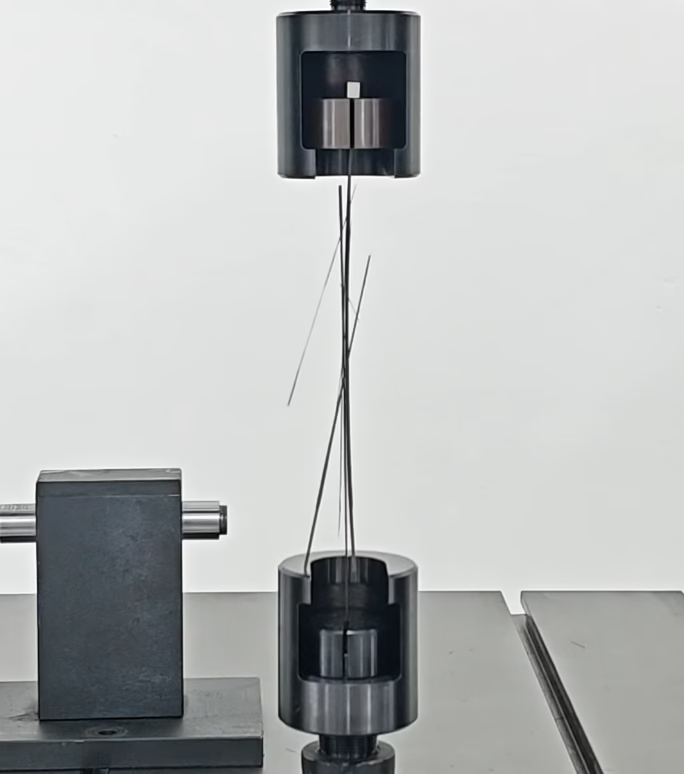
We subjected the ICAN carbon spokes to rigorous tensile testing. This isn’t about ride feel; it’s about raw, destructive force. We pull until failure. We measure every Newton. This is the core of our engineering validation. It’s where the truth lies.
Test 1: The Baseline
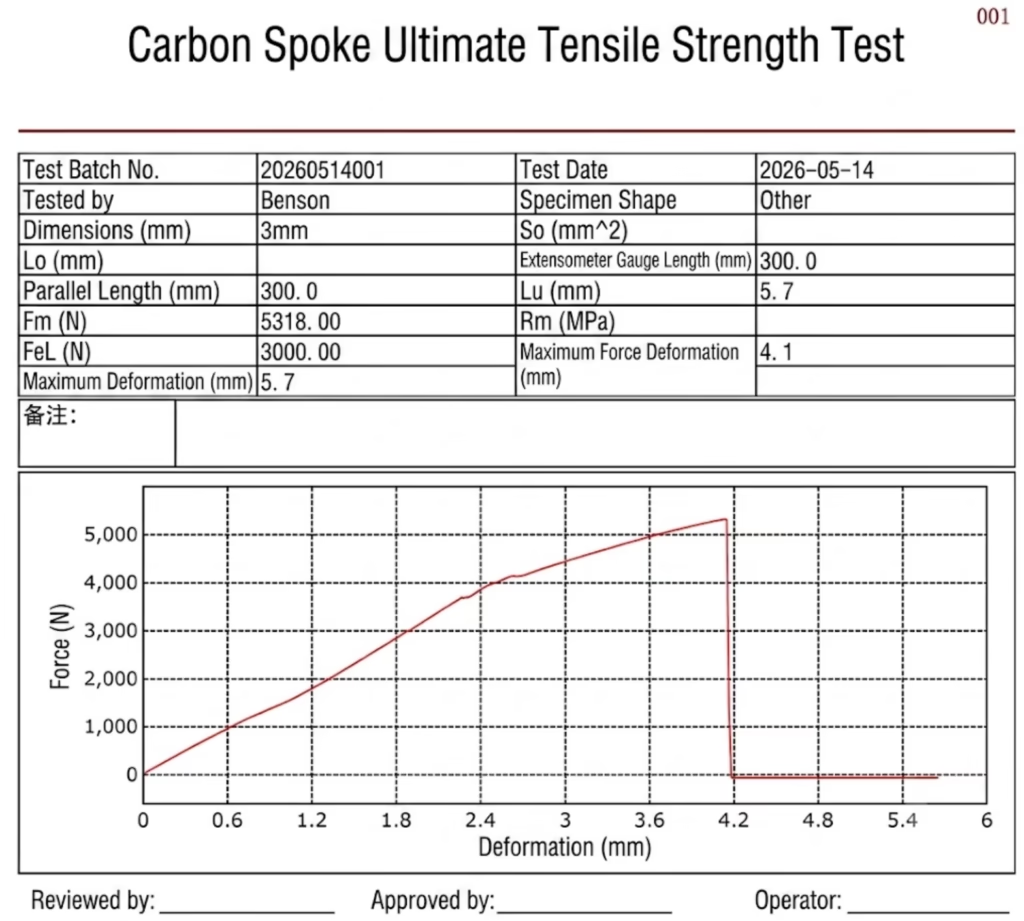
Our first test specimen pushed hard. It maxed out at exactly 5318 N. That’s Newtons of force. A significant number. Enough to make most engineers nod in approval. But we weren’t done.
Test 2: Deformation Threshold
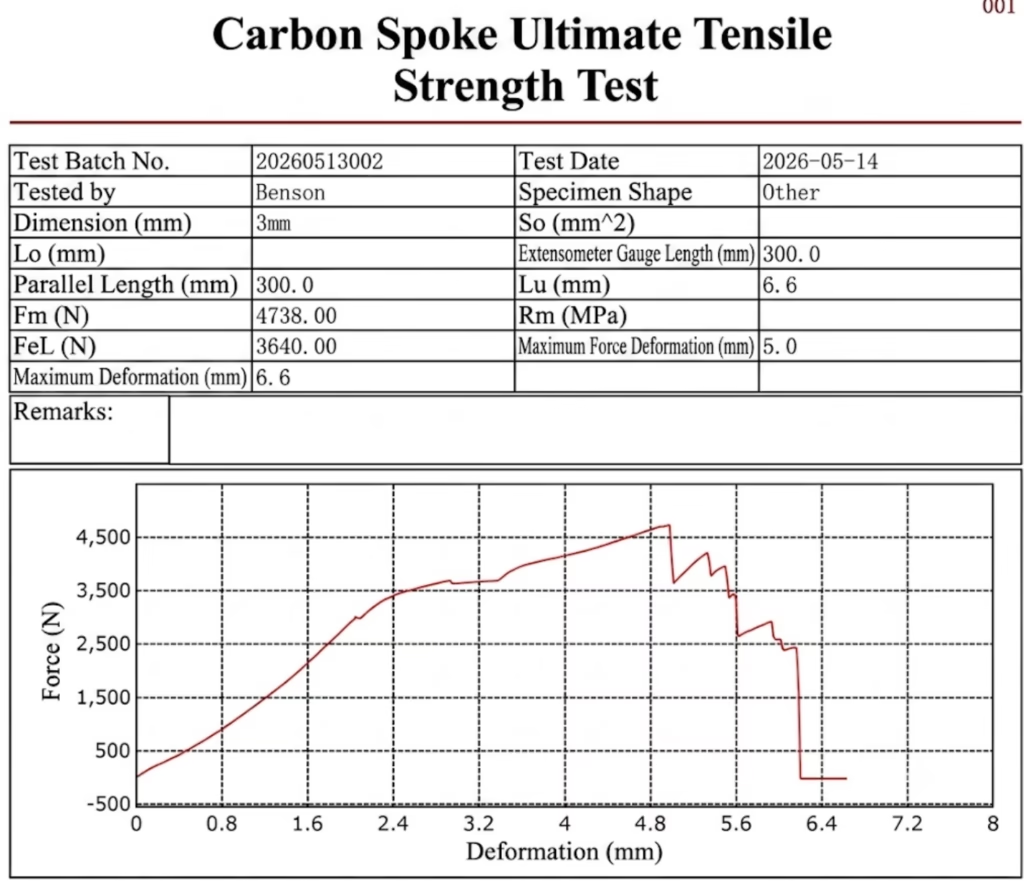
The second spoke showed us something different. It withstood an impressive 4738 N before we observed maximum deformation. This indicates a point of significant stress, but not catastrophic failure. The spoke maintained structural integrity beyond this point, albeit with increased flex.
Test 3: Pushing the Limits
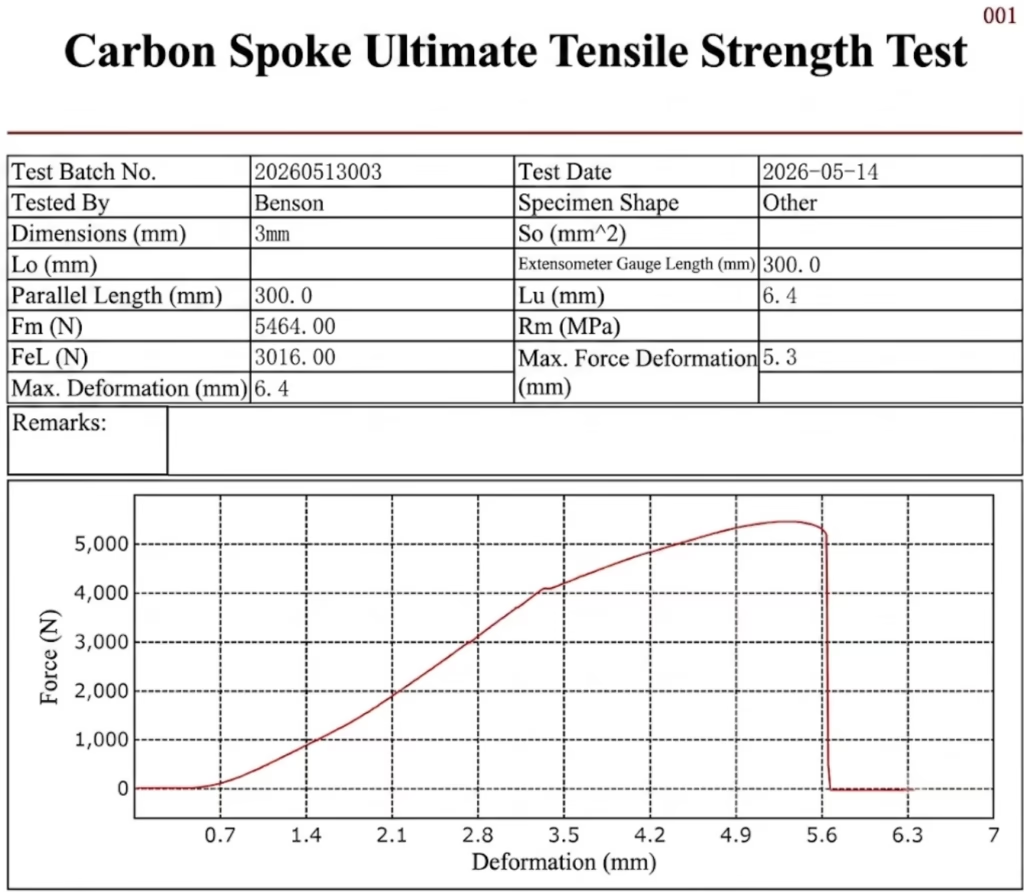
The third test pushed us further. This spoke hit a staggering 5464 N of tensile force. A new benchmark for this specific carbon spoke design. These numbers aren’t theoretical. They are measured, repeatable results.
Reality Check: Carbon vs. Steel Spokes
Let’s put those numbers into perspective. Standard, high-end steel spokes, like the widely respected Sapim CX-Ray, typically fail in tensile testing around 2500-3000 N. Let that sink in.
The ICAN carbon spokes we tested are consistently handling forces well over 5000 N. We are seeing nearly double the load capacity of top-tier steel spokes. This isn’t a marginal improvement. This is a fundamental leap in spoke technology.
This data directly counters the myth of fragile carbon spokes. It proves their inherent strength under direct tension. The forces involved in cycling are significant, but they are rarely purely tensile on a single spoke under normal riding. Impact forces and rider weight are distributed. But even under direct, brutal tension, our carbon spokes perform exceptionally.
What 5000+ Newtons Means on the Tarmac
So, what does 5000+ Newtons translate to when you’re actually riding? It means zero perceptible lateral flex during your hardest 1200-watt sprint. It means confidence on alpine descents, cornering at speed. Your input equals output. No watts lost in translation.
Imagine leaning hard into a corner at 60 kph. The forces on your wheels are immense. A flexy wheel feels vague. A stiff wheel bites. The ICAN PI series, with these carbon spokes, provides that razor-sharp precision. It’s about absolute safety coupled with maximum efficiency.
This level of stiffness, enabled by the carbon spokes, directly translates to improved bike handling and rider confidence. You can push harder, brake later, and accelerate faster because the wheel isn’t deforming under load. It’s acting as a solid extension of your effort.
The ICAN PI Series: Aero Meets Lightweight
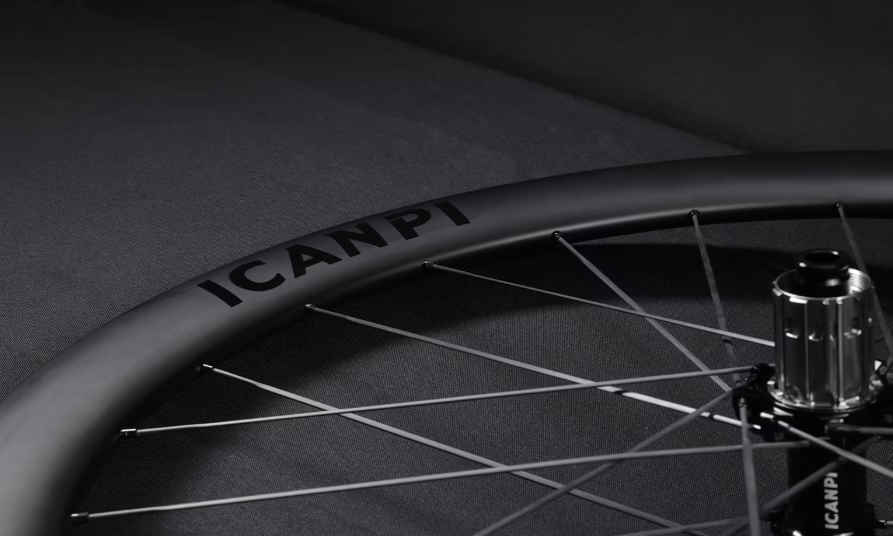
The PI 40C, PI 50C, and PI 50C wheelsets are designed around this principle of unwavering stiffness and aerodynamic efficiency. The carbon spokes are not an add-on; they are integral to the system.
Combining these incredibly strong, lightweight carbon spokes with our meticulously engineered aero rims creates a wheelset that excels across disciplines. The 40C is a pure climbing weapon, shedding grams and providing a stiff platform for steep ascents. The 50C offers the ultimate balance – aerodynamic on the flats, light enough for the hills, and stiff enough for anything.
The 55C deep section is built for pure speed. On flat courses or in breakaways, its aerodynamic profile cuts through the wind. Crucially, the carbon spokes ensure that even this deepest rim remains incredibly stiff, preventing the dreaded brake rub or vague handling that plagues lesser aero wheels under load.
Understanding Spoke Technology and Material Science
The science behind carbon fiber’s strength lies in its molecular structure. Long, chain-like molecules are bonded together, forming a rigid lattice. This structure provides exceptional tensile strength and stiffness relative to its weight. For a deeper understanding of material properties under stress, the principles outlined by organizations like ASTM International are fundamental.
When comparing to steel, carbon fiber offers a much higher strength-to-weight ratio. While steel has excellent ductility (ability to deform without breaking), carbon fiber excels in stiffness and tensile strength. This makes it ideal for applications where minimizing weight while maximizing rigidity is the primary goal. The bladed profile of the ICAN carbon spokes further enhances aerodynamic performance by reducing drag compared to round spokes.
FAQ
Will a carbon spoke snap if I hit a deep pothole?
Unlikely. With a tensile limit over 5400 N, the carbon rim will likely suffer a pinch flat or crack long before the spoke itself snaps in tension. The forces are distributed.
Are ICAN carbon spokes permanently bonded to the hub?
No. The ICAN PI series uses mechanical, threaded carbon spokes. If a crash somehow damages one, you can replace and true it just like a traditional steel spoke.
Does extreme stiffness mean a harsh, bone-rattling ride?
No. While lateral stiffness is massive for power transfer, the inherent damping properties of carbon fiber absorb high-frequency road buzz much better than steel wire.
How much weight do these carbon spokes actually save?
They weigh roughly 30% less than top-tier bladed steel spokes. Saving rotational weight at the outer edge of the wheel makes the bike accelerate significantly faster.
Why does the ICAN PI series offer 40C, 50C, and 55C depths?
40C is for pure climbing. 50C is the versatile all-rounder. 55C is for flat-out aerodynamic speed. The carbon spokes ensure all three maintain zero flex under load.
Can any local bike shop true these wheels?
Yes. As long as the mechanic has the correct spoke wrench and a basic understanding of carbon wheel tensioning limits, they true up normally.
How do these bladed carbon spokes perform in heavy crosswinds?
Brilliantly. The bladed aerodynamic profile cuts through dirty air cleaner than round steel spokes, keeping the front wheel stable in gusty conditions.
Stop losing watts to wheel flex. Upgrade to the ICAN PI series for unmatched power transfer and aerodynamic performance. Visit www.icanian.com to see the full range.