You just dropped good money on a mid-tier road bike. Maybe it’s a slick aluminum frame, maybe it’s your first entry into carbon. You’re feeling faster, looking the part. But I’m here to tell you, as a coach who’s seen thousands of riders waste watts, and a mechanic who’s tuned more race rigs than you’ve had hot dinners: your bike is still wearing lead shoes. Those stock aluminum wheels? They’re boat anchors. They are the single biggest bottleneck in your performance, and upgrading them to a proper set of carbon hoops isn’t just a luxury; it’s the most effective, most immediate transformation you can make to your ride. We’re talking about unlocking real speed, noticeable acceleration, and a vastly improved climbing experience, all rooted in undeniable physics. Stop staring at that carbon frame. It’s time to fix what truly matters.
Key Takeaways:
- Stock aluminum wheels are heavy, slow, and kill your performance potential.
- Upgrading to carbon wheels provides the most significant performance boost for intermediate riders.
- Rotational weight savings on wheels feel twice as impactful as static weight savings elsewhere.
- Modern carbon wheel aerodynamics drastically reduce drag and improve speed retention.
Why Your Stock Wheels Are Holding You Back (The Uncomfortable Truth)
Many riders buy a new bike, look at the shiny components, the sleek frame, and think they’re set. They’ll then start eyeing carbon bottle cages, ceramic bearings, or oversized pulley wheels. These are marginal gains. They’re shiny distractions.
Your factory wheels, almost without exception, are designed to hit a price point. They’re heavy. They’re often flexy. And their shallow, box-section aluminum rims are aerodynamically awful. You’re essentially dragging a parachute everywhere, fighting against every pedal stroke.
It’s not just about the absolute weight number. It’s about where that weight sits. When you’re talking wheels, you’re talking about something you have to spin up. And that, my friend, changes everything.
The Physics Doesn’t Lie: Rotational Weight is Your Enemy
This is where the rubber meets the road, quite literally. When you’re riding, your bike moves forward. Your wheels, however, do two things: they move forward, and they rotate. That rotation demands energy. A lot of it.
Think about it like this: if you save 300 grams on your frame, that’s 300 grams less you’re pushing against gravity. Nice. But if you save 300 grams on your wheels, especially on the rim itself, you’re not just reducing static weight; you’re drastically reducing something called rotational inertia.
Rotational inertia is a force that resists changes in rotational speed. The further that mass is from the center of rotation (i.e., on the rim), the more energy it takes to get it spinning up to speed, and to keep it there. And the more energy it takes to slow it down, too.
So, when you drop 300 grams from the rim of your wheel, that reduction in rotational inertia makes the wheel accelerate much more easily. During a sudden sprint, out of a corner, or when you’re punching up a short climb, that 300g saving on the rim feels like you’ve shed nearly 600g of dead weight from your frame. It’s a profound difference in responsiveness.
This isn’t some marketing spiel; it’s fundamental physics. For a deeper understanding of how rotational inertia impacts cycling performance, consider consulting resources that break down the principles of rotational dynamics in sport. Less rim weight means instant acceleration. Snappy climbing. A bike that feels alive under you.
Cutting Through the Wind: The Aero Advantage of Modern Carbon
Beyond the brutal reality of rotational weight, there’s the invisible wall you’re constantly fighting: air resistance. Your shallow, box-section aluminum rims are like tiny billboards catching every gust.
Modern deep-section carbon rims, like those 45mm or 50mm profiles, are engineered to slice through the air. They don’t just reduce drag; they become aerodynamic foils. At speeds above 30 km/h, aerodynamics dominate weight in terms of energy expenditure. A deep-section carbon wheel can save you significant watts – often 10-20 watts or more at typical riding speeds – compared to a shallow aluminum rim. That’s free speed. That’s less effort for the same output. That’s holding speed effortlessly on flat sectors, feeling like you have a tailwind even when you don’t.
And yes, I hear the old wives’ tales: “deep wheels blow you off the road in crosswinds.” That might have been true for the old, harsh “V-shape” profiles of carbon wheels a decade ago. Those designs acted like sails, making handling twitchy and downright dangerous in strong gusts.
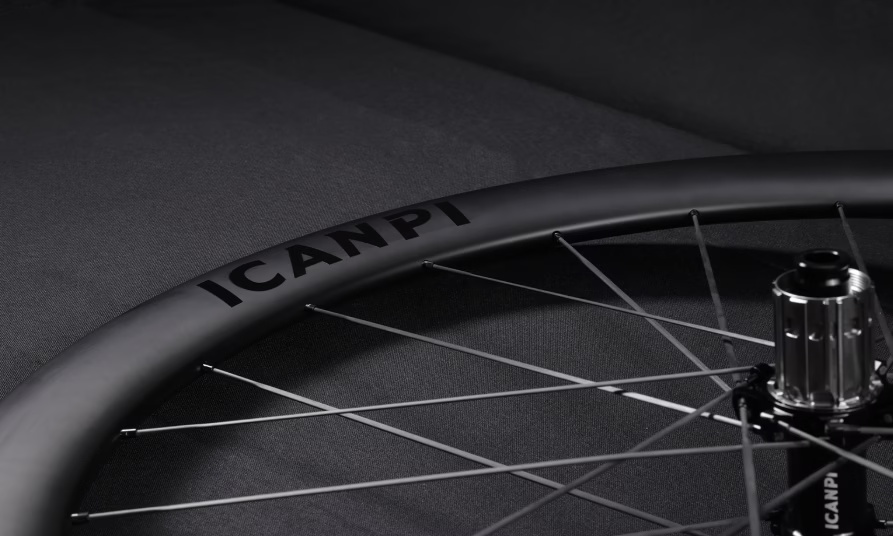
But technology moves on. Modern profiles, like the blunt “U-shape” designs found in the ICAN PI series, are specifically engineered to shed crosswinds cleanly. They create less turbulence and provide a much more stable, predictable steering feel. You get the aero advantage without fighting your bike for control.
Beyond Speed: Stiffer, Stronger, More Responsive
It’s not just about going faster. It’s about how the bike feels. Those flimsy stock wheels? They flex under power. You stomp on the pedals, and some of your precious watts are lost to lateral movement, twisting the wheel instead of propelling you forward. You feel it in sprints, in hard cornering, even just out of the saddle on a climb.
Carbon wheels, especially well-engineered ones, are laterally stiffer. They transfer power more directly. Every watt you produce goes into moving you down the road. The bike feels more responsive. More precise. It tracks better through corners. You feel more connected to the road.
And then there’s the ride quality. Carbon, by its very nature, has excellent vibration-dampening properties. It absorbs road chatter far better than aluminum. This means less fatigue on longer rides. A smoother, more comfortable experience without sacrificing performance.
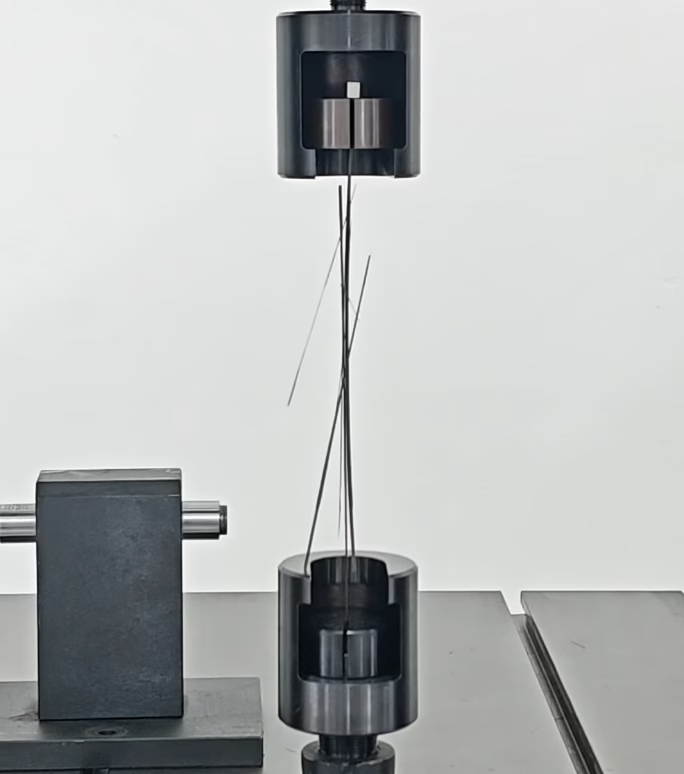
Are carbon wheels safe for heavier riders? Absolutely. This isn’t flimsy carbon fiber. ICAN PI wheels are built with rigorous carbon layups, designed for strength and durability. They typically have rider weight limits around 110kg. They are far stiffer laterally and stronger under impact than many cheap, flexible aluminum rims. They are designed to take a beating, just like you dish it out.
Сайт ICANPI Series: Performance Without the Premium Price Tag
So, you’re convinced. You need carbon wheels. But then you look at the price tags from the big brands – Zipp, Shimano, Enve – and your wallet screams. That’s where ICANIAN comes in. And this is where my pragmatic, mechanic’s brain kicks in.
ICAN isn’t just another brand. They are the factory. They engineer the carbon, they weave it, they build the wheelsets in-house. This factory-direct model is crucial. It means you skip the multi-tier distributor markups, the massive pro team sponsorship costs that get baked into those other brands’ prices. You’re paying for the engineering and the material, not the marketing fluff.
The ICAN PI series is, quite simply, the absolute price-to-performance king for intermediate riders. You get top-tier carbon technology, aero profiles, and robust construction without the exorbitant price tag. It’s the most cost-effective first major upgrade you can make to your bike, delivering tangible, immediate performance gains that you’ll feel on every single ride.
Choosing Your Weapon: The Ideal Rim Depth for Intermediate Riders
Alright, you’re ready to pull the trigger. But what depth? 30mm? 60mm? My advice, based on years of watching riders like you, is simple: 45mm or 50mm is the universal sweet spot. This depth gives you massive aerodynamic efficiency on the flats. You’ll feel the speed hold, the effort drop. But it doesn’t add unnecessary weight that would penalize you on those weekend climbing sessions. It’s the perfect balance for an all-around performance boost.
Braking Performance: Disc or Rim, We’ve Got You Covered
Another common concern: “Do carbon wheels ruin braking performance, especially in the wet?” This is another old myth that needs to die. If you ride disc brakes, which most modern mid-tier bikes do, your braking performance is completely identical to aluminum. The brake track isn’t even involved. It’s a non-issue.
But if you are still on rim brakes, ICAN hasn’t forgotten you. They use high-temperature resins and textured brake tracks on their rim brake carbon wheels. This ensures reliable, consistent stopping power, even in damp conditions. It’s not the grabby, sketchy experience of early carbon rim brakes. It’s predictable. It’s safe.
Your First Real Upgrade: Installation is Simpler Than You Think
Don’t be intimidated by swapping wheels. It’s not rocket science, and you absolutely do not need a professional mechanic for this. This is a simple garage job. You’ll need to swap your cassette from your old wheel to the new one. If you have disc brakes, you’ll mount your disc rotors. Then, throw on your tires – tubeless or clincher, whatever you prefer – and inflate them. That’s it. It takes less than 20 minutes before you are ready to roll. You’ll be amazed at how straightforward it is, and even more amazed at the difference it makes.
Часто задаваемые вопросы
Q1: Why does saving weight on wheels feel different than saving weight on the frame?
It’s all about rotational inertia. A wheel requires energy to move forward AND energy to spin. Dropping 300g from a rotating rim feels like losing nearly 600g of dead weight on the frame during a sudden acceleration. The effect is doubled because you’re reducing both static and rotational mass.
Q2: Will deep-section carbon wheels blow me off the road in crosswinds?
Not anymore. Old carbon wheels used a harsh “V-shape” that caught wind aggressively. Modern profiles, like the ICAN PI series, utilize a blunt “U-shape” design. This shape sheds crosswinds cleanly, maintaining total steering stability and making them far more predictable to handle.
Q3: Are carbon wheels safe for heavier riders?
Absolutely. ICAN PI wheels are built with rigorous carbon layups and have rider weight limits usually around 110kg. They are far stiffer laterally and stronger under impact than many cheap, flexible aluminum rims, providing superior power transfer and durability.
Q4: What rim depth should an intermediate rider choose as their first upgrade?
45mm or 50mm is the universal sweet spot. This depth provides massive aerodynamic efficiency on the flats, significantly reducing drag, without adding unnecessary weight that would penalize you during weekend climbing sessions. It’s the ideal all-rounder for noticeable gains.
Q5: Do carbon wheels ruin braking performance in the wet?
If you ride disc brakes, performance is completely identical to aluminum; the rim’s material doesn’t affect braking. If you are on rim brakes, ICAN uses high-temperature resins and textured brake tracks to ensure reliable, consistent stopping power, even in damp conditions.
Q6: What Makes the ICAN PI Series High-Quality Wheelsets Accessible for Every Cyclist?
It’s due to factory-direct engineering. ICAN weaves the carbon and builds the wheelsets in-house. This direct-to-consumer model allows you to skip the multi-tier distributor markups and the massive pro team sponsorship costs that inflate the prices of other major brands.
Q7: Do I need a professional mechanic to install an ICAN wheelset?
No. It is a simple garage job. You just need to swap your cassette, mount your disc rotors (if applicable), throw on your tires, and inflate them. It takes less than 20 minutes before you are ready to roll, making it a very accessible upgrade.
Stop burning watts on heavy aluminum stock wheels. You’ve invested in your bike; now invest in the single most impactful upgrade you can make. Transform your ride today with an ICAN PI carbon wheelset. You’ll feel the difference from the first pedal stroke, and you’ll wonder why you waited so long.