The cycling industry loves selling you frictionless magic. Walk into any high-end bike shop or scroll through online forums, and you will see ceramic bearings treated like the holy grail of speed. They are the ultimate flex. Riders shell out hundreds of extra dollars hoping a tiny set of ceramic balls will instantly turn them into local legends. But do you actually need them, or are you just burning money? Let us look inside the hub shell.
This guide will help you accurately determine which components are suitable for your road bike wheels, based on rigorous mechanical physics principles and actual riding conditions.
What is a Hub Bearing Setup?
Before we talk materials, you need to understand what we are actually discussing. Inside your road bike wheel hubs, you have cartridge bearings. These are self-contained units. They consist of an outer race, an inner race, a set of rolling balls, a retainer cage to keep those balls spaced out, and seals to keep grease in and water out. Your axle slides through the inner race, while the outer race sits pressed tight into the hub shell.
When you ride, these tiny balls roll under immense load. They support your body weight, handle the lateral forces of hard cornering, and take the abuse of every pothole you hit. The material of these balls and races determines how fast the wheel spins, how long it lasts, and how much maintenance you will have to perform in your garage.
Why Does It Matter?
Your hubs are the heart of your wheelset. Every watt you generate in your legs goes through your drivetrain, into your freehub, and out through your hub bearings to the road. Cheap, gritty, or poorly sealed bearings waste energy. They create mechanical drag. Over time, contaminated bearings develop play, making your wheels feel sluggish and unresponsive.
Choosing the right bearing architecture is a balancing act between friction, durability, maintenance, and cost. If you ride in the rain, your needs are different from a track racer who only rides on pristine indoor wood. If you ignore this reality, you will end up with a high-priced setup that self-destructs in three months of wet winter training.
The Steel Reality: The Undefeated Champion of the Real World
High-grade steel bearings are the undisputed workhorses of the cycling world. But do not mistake them for cheap junk. A premium steel cartridge bearing, manufactured to high precision standards (like ABEC-3 or ABEC-5), is an engineering marvel. These bearings feature high-carbon chromium steel races and balls that are incredibly tough.
The biggest weapon in the steel bearing’s arsenal is its sealing. Because steel is highly resistant to structural deformation under normal loads, manufacturers can use high-contact rubber seals (often called LLU or LLB seals). These seals press firmly against the inner and outer races. They keep out rain, road salt, mud, and grit. Inside, they are packed with a thick, marine-grade waterproof grease.
For 95% of riders doing daily training miles, weekend group rides, and local sportives, steel is the correct choice. It is highly cost-effective. It requires almost zero maintenance. You can ride through a torrential downpour, spray your bike down, and your steel bearings will keep spinning smoothly for thousands of miles. They are built for the real world.
The Ceramic Weapon: Marginal Gains for Race Day
Now let us talk about the ceramic weapon. True ceramic hybrid bearings use silicon nitride (Si3N4) balls rolling inside high-grade steel races. Silicon nitride is an incredibly hard, dense material. These balls are rounder, smoother, and lighter than their steel counterparts. They do not rust, and they have an incredibly low friction coefficient.
Under lab conditions, ceramic bearings spin forever. They save you a marginal 1 to 3 watts across a wheelset compared to standard steel. In a sport where races are won by millimeters, those 1 to 3 watts matter. It is the ultimate race-day weapon. But here is the catch the marketing departments do not want you to know: those savings are achieved by using non-contact seals (like VV seals) and ultra-light, low-viscosity oil instead of thick grease.
This makes ceramic bearings highly vulnerable to the elements. If road grit bypasses the loose seal, the ultra-hard ceramic balls will press that grit directly into the softer steel races. They will pit, groove, and destroy those steel races very quickly. Once the race is pitted, the bearing is ruined. It will feel like gravel when you spin the wheel. If you run ceramics, you must commit to a strict maintenance schedule of cleaning, degreasing, and re-oiling them constantly.
Hub Engagement Matters More Than Bearing Material
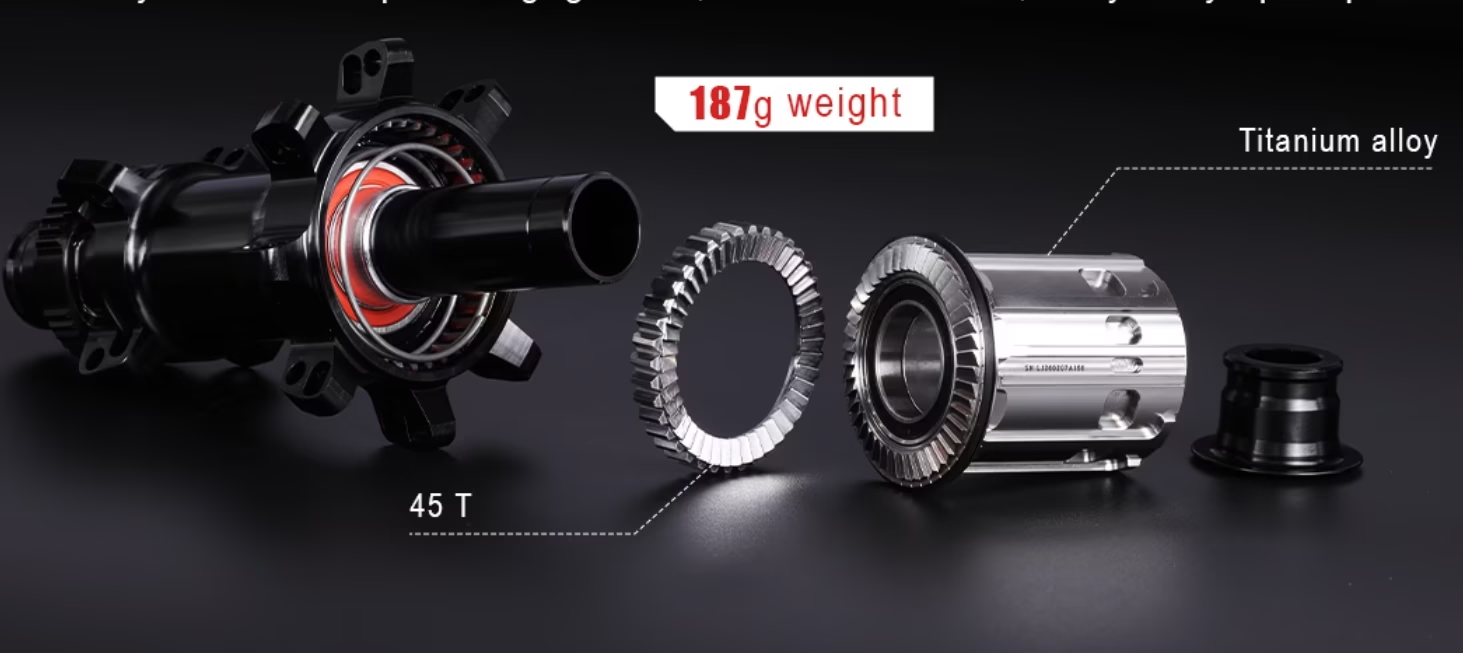
Riders obsess over ceramic vs steel bearings cycling debates, but they completely ignore the freehub. If you want a wheelset that feels fast, fast freehub engagement is actually more noticeable than bearing material. When you coast through a corner and then step on the gas, there is a moment of lag before your hub catches and drives you forward. That is called dead-stroke.
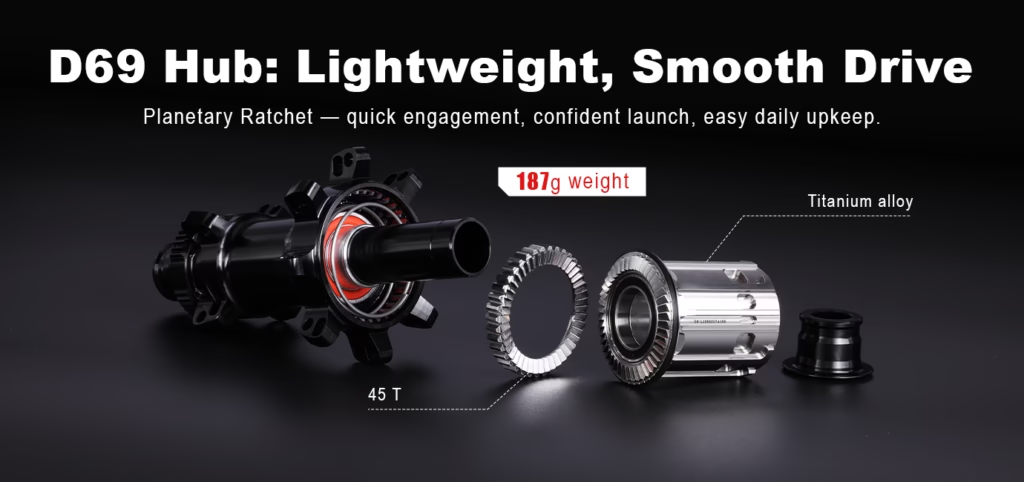
Consider the ICANPI 40C hub design. We engineered this hub with a high-density engagement system using precision-machined pawls and ratchets. This design drastically reduces rotational dead-stroke in your pedals. The exact millisecond you stand up to sprint, your power hits the pavement. There is no lag, no mushy feeling, just instant acceleration. Combining a high-engagement hub with the right bearing choice for your local climate is how you actually upgrade road wheels for maximum performance.
Getting Started: Evaluating Your Needs
Do not just blindly buy the most expensive option. Take an honest look at how and where you ride. If you are a beginner or intermediate rider looking to upgrade road wheels, ask yourself these three questions:
- What is my local weather like? If you ride in wet, muddy, or winter conditions, choose steel.
- How much time do I want to spend wrenching? If you want to install it and forget it, choose steel.
- Am I chasing podiums? If you are racing time trials, criteriums, or high-level road races where every fraction of a second counts, choose ceramic.
Once you know your profile, you can make an educated purchase. ICANIAN does not force a single setup on you. We let you customize the ICANPI 40C wheelset with your preferred bearing architecture at checkout. You can choose the rugged reliability of steel or the high-speed marginal gains of ceramic based on your budget and local weather conditions.
Common Mistakes to Avoid
The most common mistake I see in my workshop is riders packing their ceramic bearings with thick, heavy lithium grease. They do this because they want them to last longer. But doing this completely defeats the purpose of the low-friction upgrade. It creates massive viscous drag, making them slower than a standard steel bearing.
Another major error is using high-pressure power washers near your wheel hubs. No seal, whether contact or non-contact, is designed to withstand a direct blast of pressurized water. You will blast the grease straight out of your steel bearings, causing them to rust, and you will wash the light oil out of your ceramic bearings, causing them to seize. Use a gentle bucket and sponge, and keep the hose away from the hub center.
Next Steps for Better Performance
If you want to feel how your current bearings are doing, take your wheels off the bike. Hold the axle ends between your fingers and spin the wheel. Do you feel a notched, gritty sensation? That is pitting. If it feels rough, it is time for a replacement. Do not wait until the wheel starts wobbling, as that can damage your hub shell permanently.
If you are ready for a real performance boost, check out the ICANPI 40C. It gives you the perfect platform to build your dream wheelset. You get the instant power transfer of our high-density engagement freehub, combined with the exact bearing type that fits your lifestyle.
Frequently Asked Questions
Do ceramic bearings actually save watts?
Yes, but we are talking 1 to 3 watts total across the wheelset. It is a marginal gain strictly for competitive racers chasing podiums, not a magic bullet for slow legs. You will get a much bigger aerodynamic advantage from wearing a tight-fitting jersey or optimizing your tire pressure.
Are ceramic bearings more fragile than steel?
The ceramic balls (Silicon Nitride) are significantly harder than steel. But the steel races they roll inside are softer. If road grit bypasses the seal, the ultra-hard ceramic balls will pit and destroy the steel races very quickly. This creates a rough, slow-spinning bearing that must be replaced.
Why are steel bearings recommended for winter training?
Weather sealing. Premium steel bearings usually feature heavy-duty contact seals packed with marine-grade waterproof grease, blocking out salt and water effortlessly during nasty winter miles. They require virtually zero maintenance compared to delicate ceramic setups.
What makes the ICANPI 40C freehub engagement feel so fast?
We engineered the hub with a high-density engagement system. This drastically reduces the rotational dead-stroke in your pedals, meaning your watts hit the tarmac the exact millisecond you stand up to sprint. It gives the wheel an incredibly responsive, snappy feel when accelerating out of corners.
Can I upgrade from steel to ceramic later on my ICANPI wheels?
Absolutely. The hubs utilize standardized cartridge bearing dimensions. Any competent local bike shop with a bearing press can drift out the steel cartridges and press in ceramics whenever you are ready. You are never locked into one system.
Do I need special grease for ceramic hub bearings?
Yes. You must use ultra-low friction, lightweight synthetic grease or specific oil drops. Packing a ceramic bearing with thick, heavy lithium grease completely defeats the purpose of the low-friction upgrade by creating massive mechanical drag inside the cartridge.