You are standing in front of your bike, staring at a pair of carbon spoke wheels, wondering if you are about to make a massive, expensive mistake. The internet forums are full of terrifying warnings. Self-proclaimed experts claim that carbon spokes will turn your ride into a harsh, bone-shaking nightmare, or that a single snapped spoke means throwing your entire expensive wheelset into the nearest dumpster. These claims are flat-out wrong. In this guide, we will dissect the mechanical physics of modern carbon spoke wheels, explain why repairable carbon spokes have changed the maintenance game, and prove why the ICANPI 40C is a massive leap forward in wheel lateral stiffness without sacrificing your lower back.
Key Takeaways:
- Modern carbon spokes are not glued in; they use threaded, mechanical designs that make them as repairable as traditional steel spokes.
- Carbon fiber possesses superior radial damping properties compared to steel, meaning they absorb high-frequency road vibrations much better.
- The ICANPI 40C carbon spoke wheels deliver zero-deflection lateral stiffness for explosive sprints while remaining highly serviceable.
The Mechanic’s Reality: Why Steel is No Longer the Only Option
For years, steel wheelsets were the undisputed king. They were stable, inexpensive, and easy to replace. However, steel also has its physical limits. To increase the rigidity of steel wheels, weight must be added. For example, by using thicker spokes, deeper rims, or more spoke holes. But this severely impacts a bicycle’s climbing performance.
Carbon fiber changed everything. But the first generation of carbon wheels got a bad reputation. Those early designs featured bonded, one-piece construction. The hub, spokes, and rim were molded together in a single piece. If you crashed and broke a single spoke, the entire wheel was indeed trash. That design was a mechanical dead end for everyday riders. Today, we build wheels differently. We use individual, high-tensile carbon spokes that thread into the hub and rim just like steel. The mechanical reality has shifted, but the forum myths remain stuck in 2012.
Because carbon fiber has a much higher tensile strength than steel, we can run fewer spokes at higher tensions. This yields a lighter wheel that resists lateral deflection under heavy loads. If you are putting out 1200 watts in a sprint, a steel wheel will flex. You can feel the brake pads rubbing. You can feel your energy being wasted as heat and lateral wobble. A properly engineered carbon spoke wheel does not budge. It transfers every single watt directly to the asphalt.
Myth 1: The Breakage and Repair Nightmare
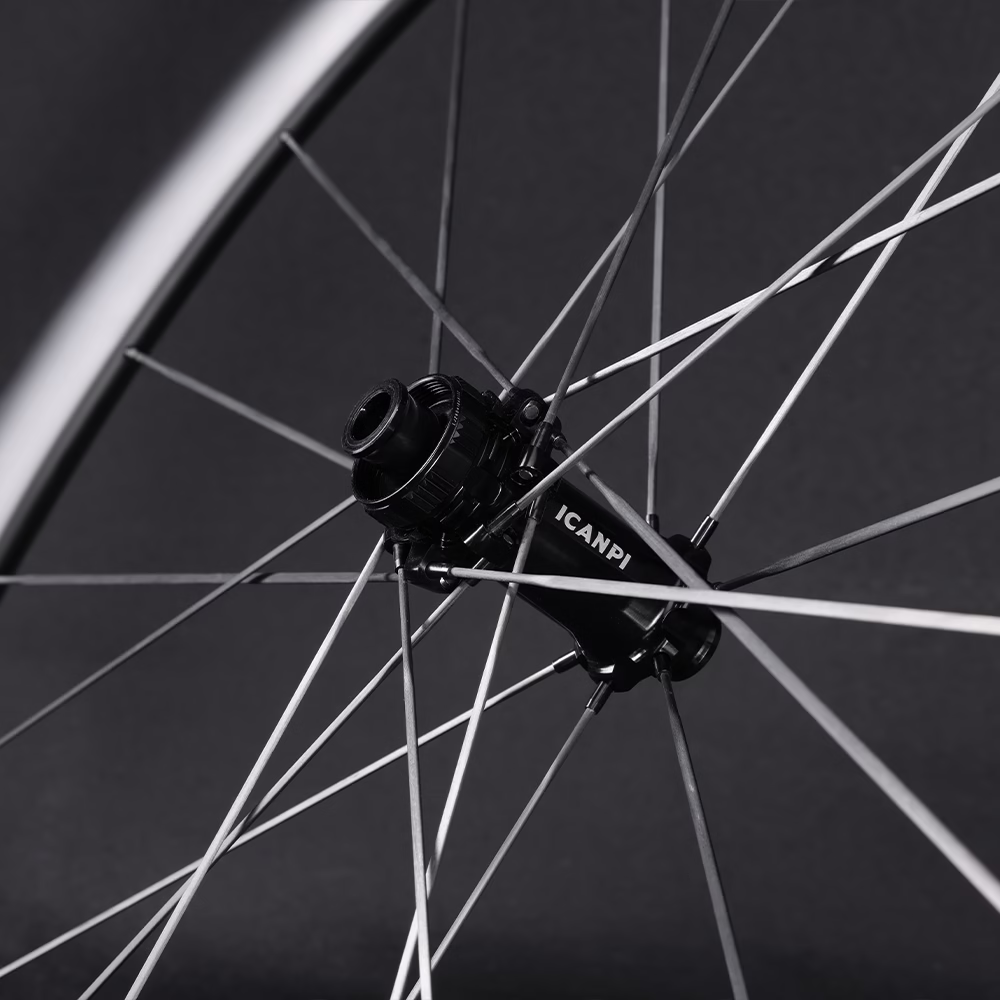
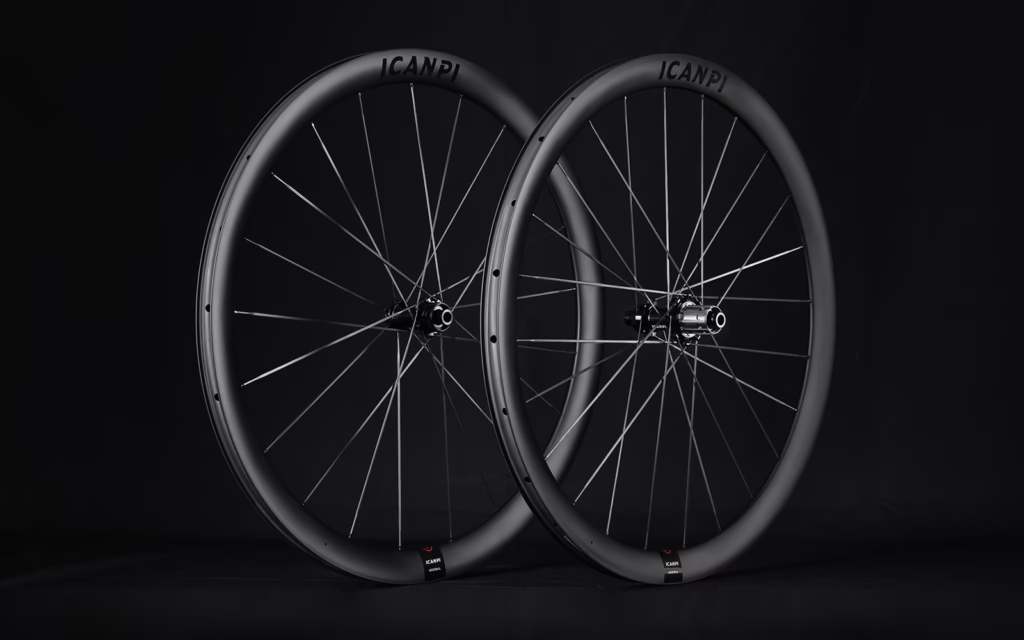
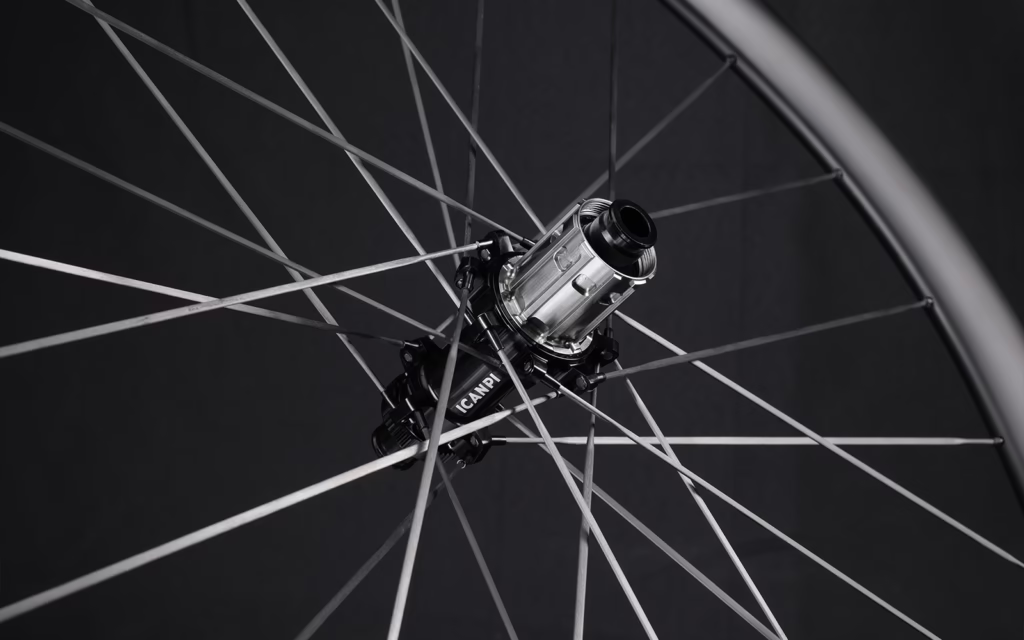
Let’s first debunk the biggest lie. People think that if a carbon fiber spoke breaks, the ride is over and their wallet is empty. In reality, repairing spokes is much simpler. Take a wheelset like the ICANPI 40C, for example. We use threaded, serviceable carbon fiber spokes. These spokes are independent, high-modulus carbon fiber rods that are mechanically threaded and bonded at both ends, rather than being glued to the rim.
If you drop your chain into the spokes or take a massive hit from a stray rock, you might break a spoke. It happens. But instead of throwing the wheel away, you take it to your local bike shop. Or better yet, you fix it yourself on your workbench. You simply unscrew the broken spoke. You thread in a new one. You bring it up to tension using a standard spoke wrench and a quality tension meter. It is that simple. To make it even easier, ICANPI includes spare spokes in the box with every single wheelset order. We know what real-world riding is like, and we do not expect you to wait weeks for a proprietary part to arrive from an overseas warehouse.
Because the spokes are independent mechanical units, they do not require any weird proprietary tools. Any competent mechanic who knows how to true a standard DT Swiss or Sapim steel-spoked wheel can handle these. They use a standard internal or external nipple system. You do not need to learn a new language or buy a thousand dollars worth of specialty gear. You just clamp the wheel in the stand, check the alignment, and turn the wrench. The fear of the unrepairable carbon wheel is officially dead.
Myth 2: The “Wooden Wheel” Ride Quality Lie
The second misconception is that carbon fiber spokes are too stiff. People call them “wooden wheels” because they mistakenly believe that stiffness in one direction implies stiffness in all directions. This is a superficial understanding of bicycle physics. We must differentiate between a wheel’s lateral stiffness and radial stiffness. These are two completely different physical forces acting on different planes of the wheel.
Lateral stiffness is what keeps your wheel straight when you are throwing the bike side-to-side on a steep climb or diving into a high-speed corner. When you lean the bike, lateral forces try to bend the wheel. If the wheel flexes, your handling becomes vague, and you lose power. Carbon spokes have massive tensile strength, meaning they do not stretch under these lateral loads. The wheel lateral stiffness of the ICANPI 40C is incredibly high. It tracks like it is on rails. You get instant, explosive acceleration the millisecond you step on the pedals.
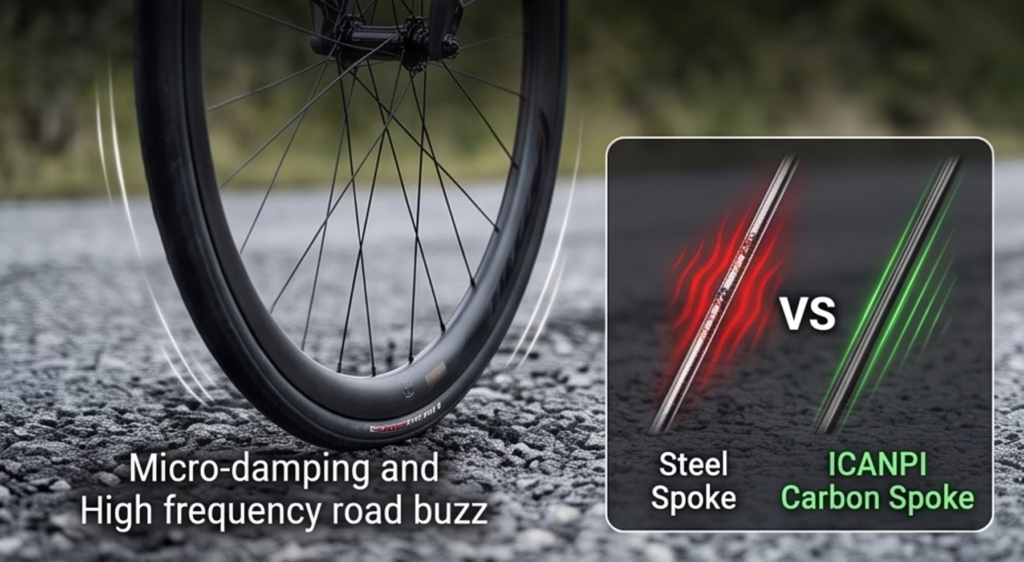
But radial stiffness is how the wheel reacts to vertical impacts—like potholes, expansion joints, and rough chip-seal roads. This is where carbon fiber shines. Unlike steel, which acts like a stiff spring and transmits high-frequency vibrations directly up the fork and into your hands, carbon fiber naturally dampens vibrations. The microscopic structure of carbon absorbs high-frequency road buzz. It acts as a micro-damper between you and the road. While the wheel remains laterally rock-solid, it radially dampens the harshness of the road. By reducing unnecessary vibration loss transmitted from the road surface to the torso, this system effectively protects the rider’s core from chronic stress injuries, ensuring a stable cruising posture can be maintained even in the latter half of a hundred-kilometer endurance ride.
The Mechanical Physics of Tensile Strength and Deflection
To understand why carbon spokes perform this way, we have to look at the engineering data. Steel is isotropic, meaning it has the same physical properties in all directions. Carbon fiber is anisotropic. We can align the carbon fibers precisely along the axis of tension. This allows us to maximize tensile strength where it matters most while keeping the weight incredibly low. A carbon spoke can be up to 30% lighter than a premium bladed steel spoke while offering significantly higher tensile strength.
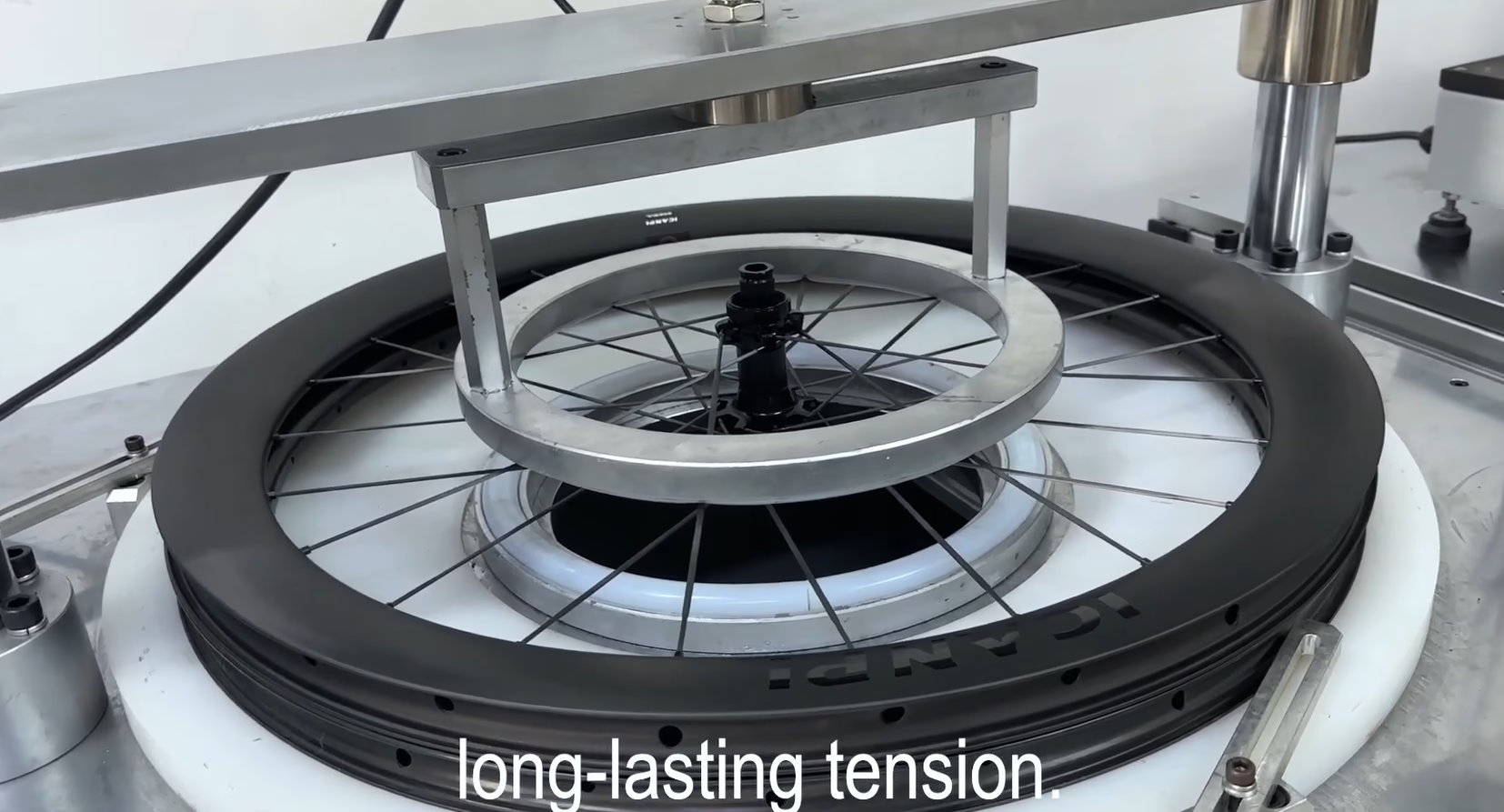
When we build a wheel, we tension the spokes to prevent them from going slack under load. When a spoke goes slack, the wheel loses its structural integrity. Because carbon spokes do not stretch permanently over time, they maintain their tension profile much longer than steel. To ensure safety and performance, bicycle wheels must meet strict international testing protocols, such as the ISO 4210 safety standards for bicycle wheels, which govern impact resistance and fatigue life. Modern carbon spoke designs easily surpass these standards because the material does not suffer from the same metal fatigue issues that eventually cause steel spokes to snap at the J-bend or straight-pull head.
| Spoke Material | Tensile Strength (MPa) | Weight per Spoke (g) | Vibration Damping |
|---|---|---|---|
| Premium Bladed Steel | Approx. 1200 | 4.3 – 4.8 | Low (transmits buzz) |
| ICANPI Carbon Spoke | Approx. 2400+ | 2.8 – 3.2 | High (absorbs buzz) |
This table shows the stark contrast. You are getting double the tensile strength at roughly two-thirds of the weight. For a wheel builder, this is the holy grail. It means we can build a wheel that is both lighter and stiffer without reaching the fatigue limit of the material. When you ride a wheel built with these specifications, the difference is not subtle. It is immediate. We conducted experimental tests on ICANPI carbon spokes in another article.
The ICANPI 40C: The Ultimate Climbing Weapon
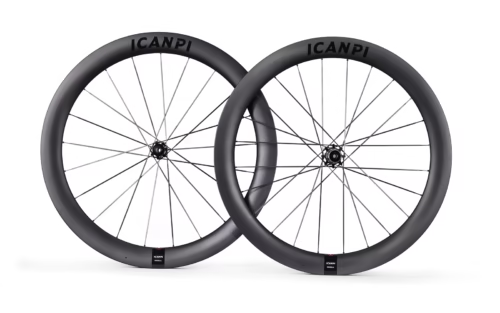
Why did we design the ICANPI 40C with a 40mm rim depth? Because it represents the perfect sweet spot for real-world road riding. Deeper rims—like 50mm or 60mm—are great for flat time trials, but they add weight and catch crosswinds. Shallow rims are light, but they lack aerodynamic efficiency. The 40C rim profile combined with ultralight carbon spokes gives you the best of both worlds.
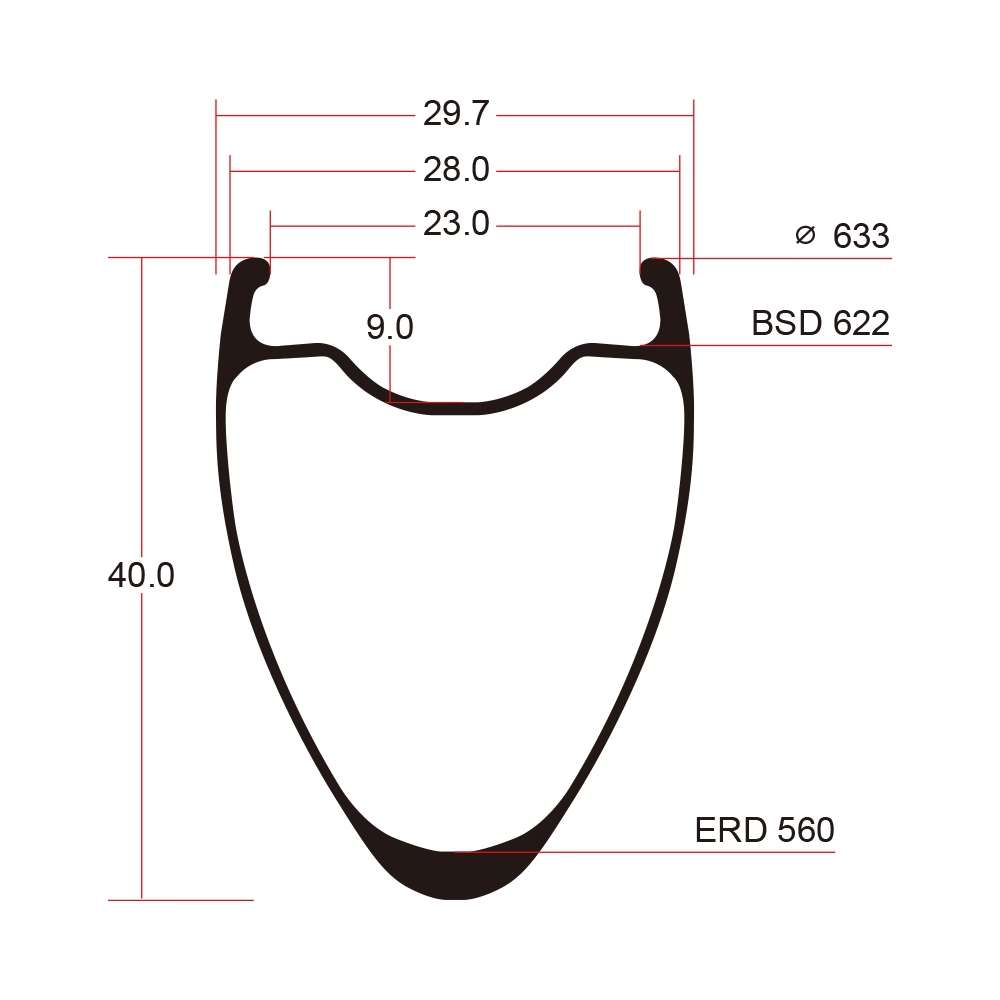
Because the rim is a shallow, blunt aero shape, it sheds crosswinds cleanly. You do not get that terrifying steering tug when a truck passes you or when you descend a mountain pass at 70 km/h. At the same time, the rotational weight is incredibly low. When you are climbing a 10% gradient, every gram of rotational mass feels twice as heavy. By using carbon spokes on a 40mm rim, we strip away the dead weight where it matters most: at the outer edge of the wheel. This gives you instant acceleration when you step out of the saddle to cover an attack.
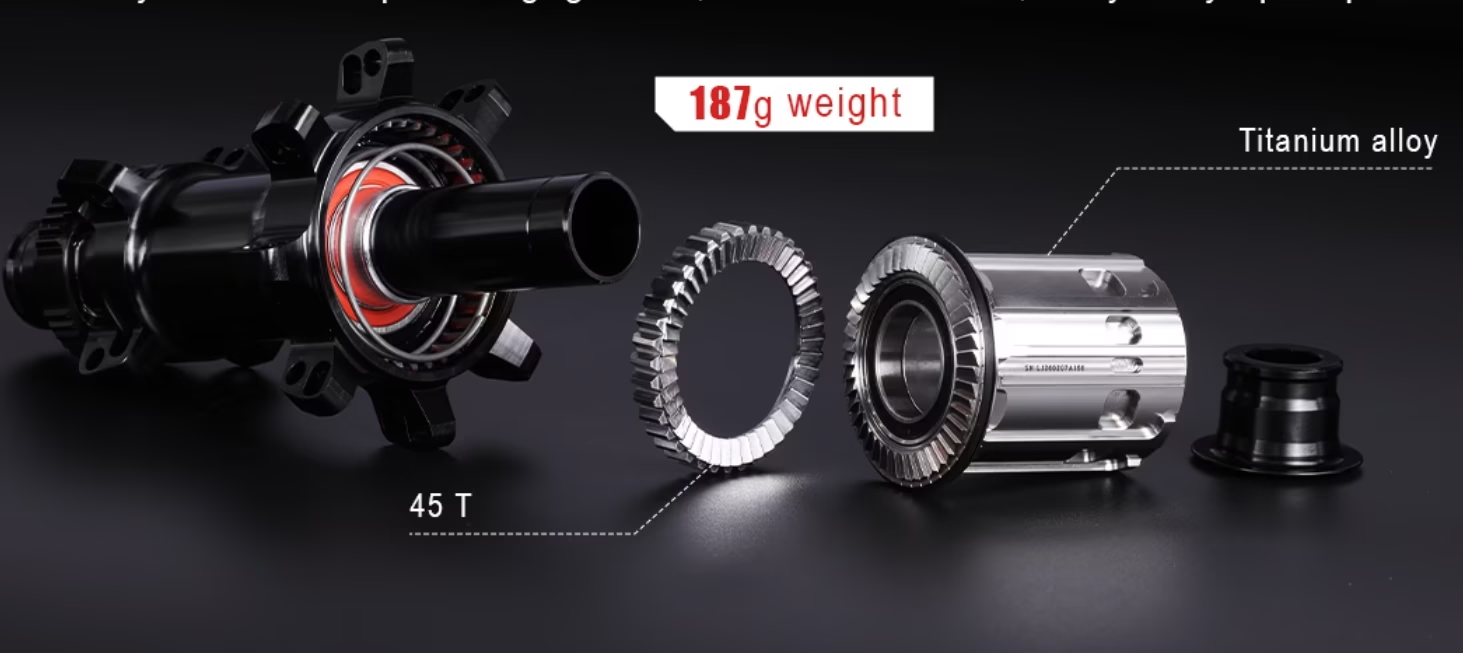
And because we use a high-grade carbon layup for the rim bed, the spoke holes can handle the high tensions required for carbon spokes. The entire system is engineered to work together. The hub flanges, the spoke angles, the rim bed thickness, and the carbon layup are optimized as a single cohesive unit. This is why the ICANPI 40C handles so predictably under extreme loads.
FAQ
Q1: If I snap a carbon spoke on a pothole, is the wheel ruined?
No. ICANPI wheels use threaded mechanical spokes, not one-piece bonded designs. You just unscrew the broken spoke, thread in a new one, and true the wheel. We include extra spare spokes with every order for this exact reason. You do not need to throw the wheel away or send it to a specialized carbon repair facility. It is a simple, mechanical swap that can be done in any standard workshop.
Q2: Can my Local Bike Shop (LBS) actually true these wheels?
Yes. Any competent mechanic with a standard spoke wrench and a quality tension meter can true an ICANPI wheel. They tension exactly like traditional steel-spoked wheels. There are no strange proprietary glues, special keys, or complex procedures required. If your local mechanic knows how to build a standard wheel, they can service this wheelset without any issues.
Q3: Do carbon spokes lose tension over time like steel spokes?
Almost never. Carbon fiber does not stretch permanently under load like steel wire does. Once the factory stress-relief process is complete, the tension holds dead-straight for thousands of miles. Unlike steel, which can undergo plastic deformation and slowly lose its tension profile over rough roads, carbon remains structurally stable unless it suffers physical impact damage.
Q4: Why specifically choose the ICANPI 40C depth for carbon spokes?
The 40C is the ultimate climbing weapon. Combining a shallow, ultralight 40mm rim with the extreme stiffness of carbon spokes gives you instant, explosive acceleration on steep gradients without the weight penalty of deeper aero profiles. It strikes the perfect balance between aerodynamic efficiency, low rotational weight, and stability in unpredictable mountain crosswinds.
Q5: Will carbon spokes make a 100km ride feel unbearably harsh?
No. People confuse lateral stiffness with radial harshness. While the wheels will not flex side-to-side during a sprint, the carbon material fundamentally absorbs high-frequency vibrations from rough tarmac much better than a steel spring. This means you get all the power transfer of an ultra-stiff race wheel without the fatiguing road buzz that wears down your body over long distances.
Q6: Is there a rider weight limit for the ICANPI carbon spoke wheels?
Yes. We engineer these specific carbon spoke layups with a structural rider weight limit of 125kg (275lbs). This ensures absolute safety during heavy descents and aggressive cornering. If you fall within this weight limit, you can ride these wheels hard on any road surface without worrying about structural failure or premature wear on the spoke interfaces.
Q7: Are carbon spokes dangerous in heavy crosswinds?
The spoke material has nothing to do with crosswind stability. The aerodynamic profile of the 40C rim itself is shallow and blunt enough to shed crosswinds cleanly, keeping the steering completely predictable. Because the spokes themselves have a highly aerodynamic, thin bladed profile, they present minimal surface area to lateral winds, ensuring you stay in complete control of your line.
Stop listening to outdated internet myths written by people who have never held a spoke wrench. The era of fragile, unserviceable carbon wheels is over. Ditch your heavy, flexy steel-spoked wheels and experience the ultimate in power transfer and road-smoothing comfort. Experience the ICANPI 40C ultralight carbon spoke wheelset and feel true mechanical efficiency on your next climb.