Most carbon wheelsets are ticking time bombs of detensioning. In this deep dive, you will learn how we engineer stable carbon spoke tension and eliminate the structural settling that ruins modern wheel builds. When you buy an ICANPI carbon spoke wheelset. We do not guess. We measure. Because a loose wheel is a slow, dangerous wheel.
Key Takeaways:
- Double-Tension Protocol: Prevents structural tension drop-off after your first hard sprint.
- Toray T700/T800/T1000 Matrix: Reinforced rim beds prevent cracking under extreme spoke loads.
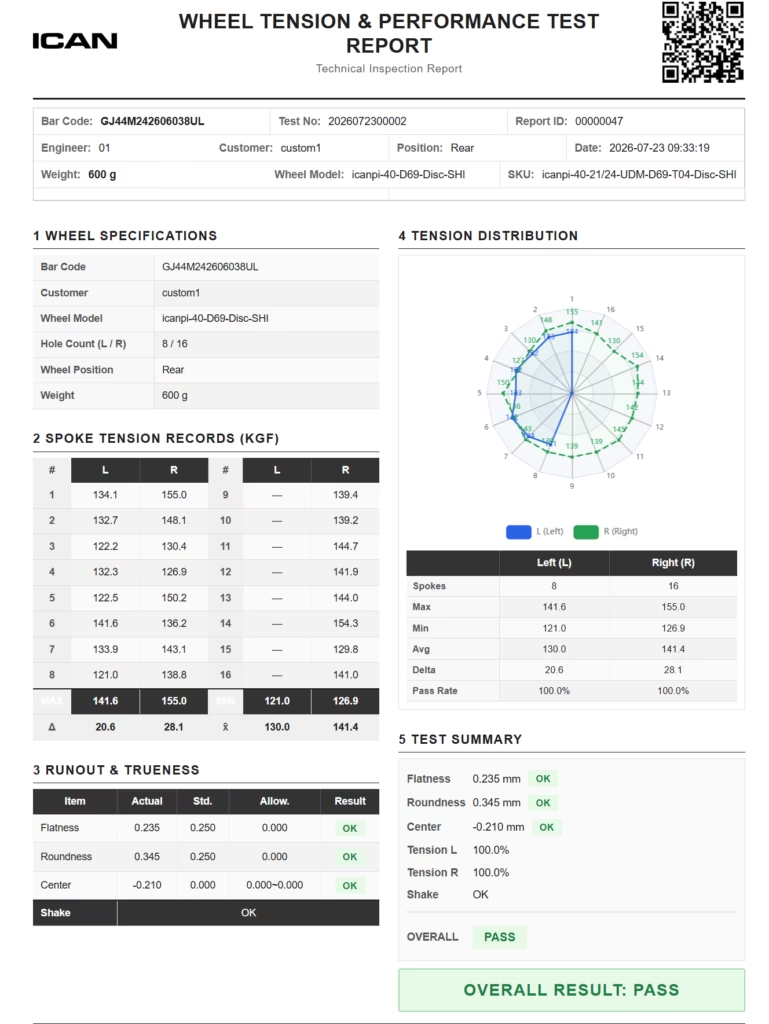
- <0.25mm Tolerance(0.235mm): Mahr digital dial indicators guarantee flawless tracking and zero speed wobble.
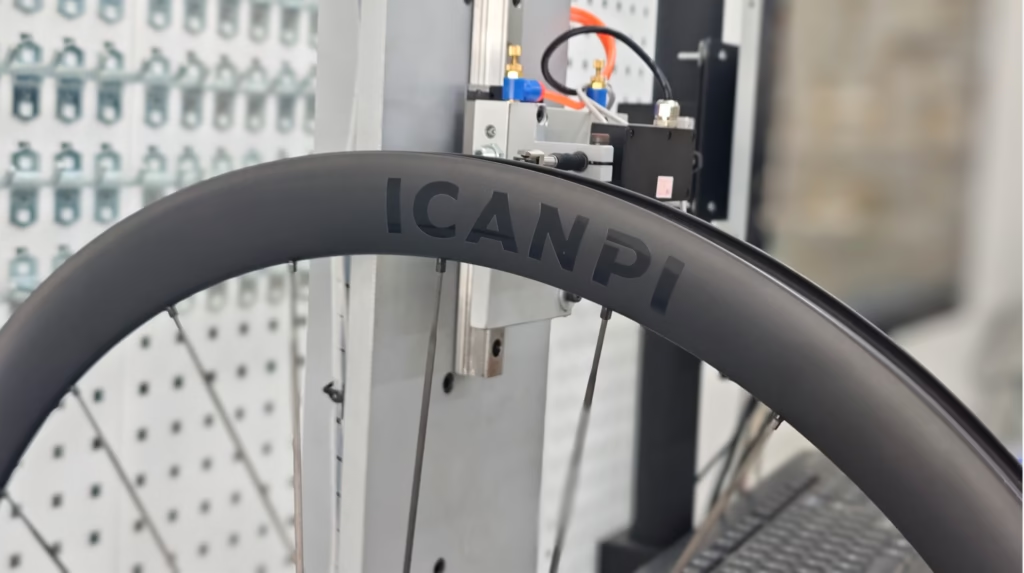
Why Does Carbon Spoke Tension Decay on Your First Ride?
You buy a new wheelset. It feels fast out of the box. But three rides in, you hear a sharp metallic ping. Suddenly, your wheel is out of true. Why? The answer lies in the physics of mechanical settling. When a wheel is laced, the nipples do not sit perfectly flush against the rim bed immediately. They rest on microscopic imperfections in the carbon layup. Under the load of a rider, these imperfections crush. The nipple slips a fraction of a millimeter. The spoke loses tension. The wheel goes soft.
With carbon spokes, this problem is magnified. Carbon fiber has an incredibly high tensile modulus. It does not stretch plastically like steel wire. If a carbon spoke loses even a tiny fraction of its tension due to nipple settling, the lateral stiffness of the wheel collapses. This is why cheap, mass-produced wheels fail. They are tensioned once, boxed, and shipped. The customer does the work of settling the wheel on the road. We find that lazy. We do that work in our factory before the wheel ever sees a tire.
And then there is spoke wind-up. During wheel truing, as the nipple is turned, the spoke twists. A twisted spoke is a loaded spring. The moment you hit a pothole or drop 1000 watts into the pedals, that spring untwists. The tension drops instantly. To prevent this, our builders use custom slotted spoke holders to physically lock the carbon spoke in place. But even then, micro-twisting happens. We have to force those stresses out of the system mechanically.
The ICANPI Double-Tension Protocol: How We Stop the “Ping”
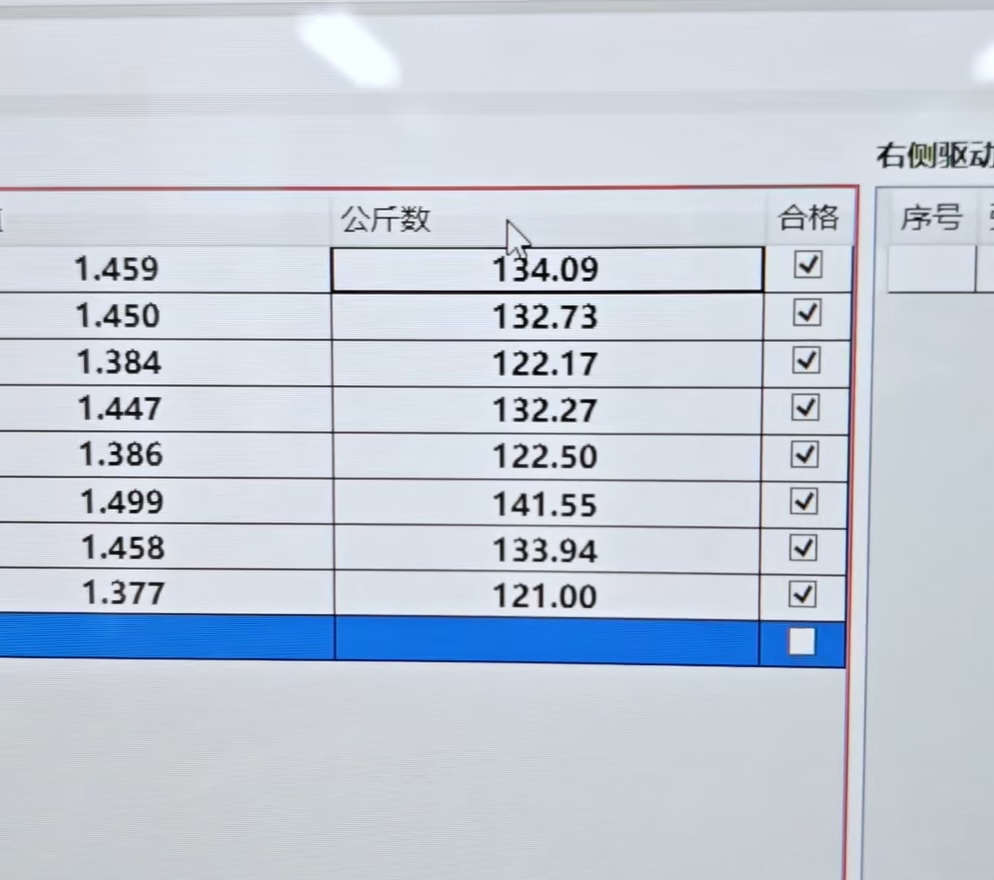
We do not trust a single tensioning cycle. It is mechanically impossible to build a stable wheel in one pass. Our factory uses a proprietary Double-Tension Protocol. First, the hand-built carbon wheels are laced and brought to a baseline tension of 115 kgf on the drive side. Then, we place the wheel into our pneumatic stress-relief jig. This machine does not gently massage the wheel. It violently compresses the wheel laterally, simulating extreme cornering forces up to 130kg of side load.
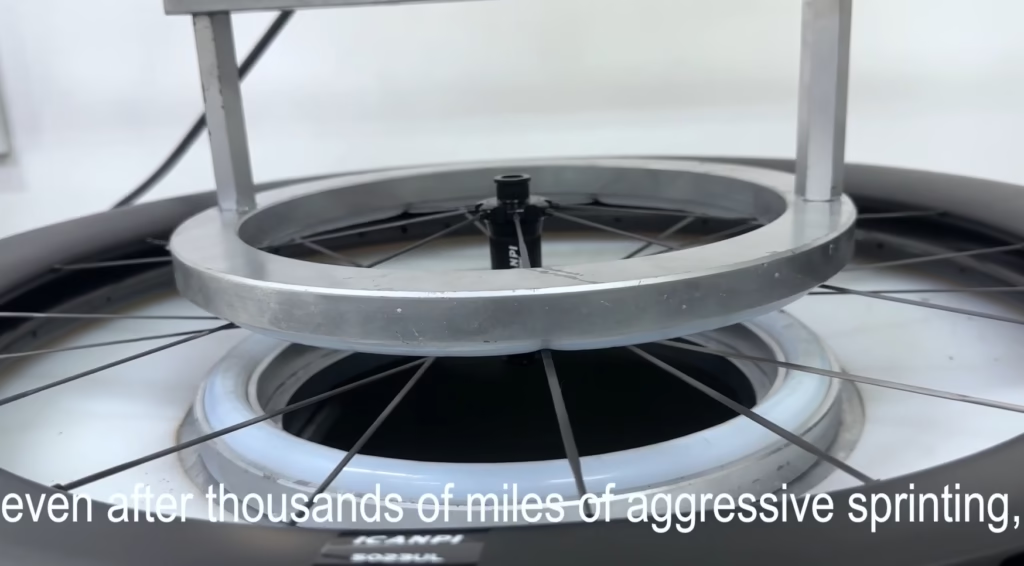
This violent compression forces the spoke nipples to bed deeply into the carbon rim. It violently untwists any micro-rotation left in the carbon spokes. The metal-on-carbon interfaces find their permanent home. After this mechanical stress-relief cycle, we measure the tension again. On average, the tension drops by 12% to 15% during this first cycle. This is the exact drop-off that would have happened on your first ride. If we stopped here, your wheel would go out of true within 100 miles.
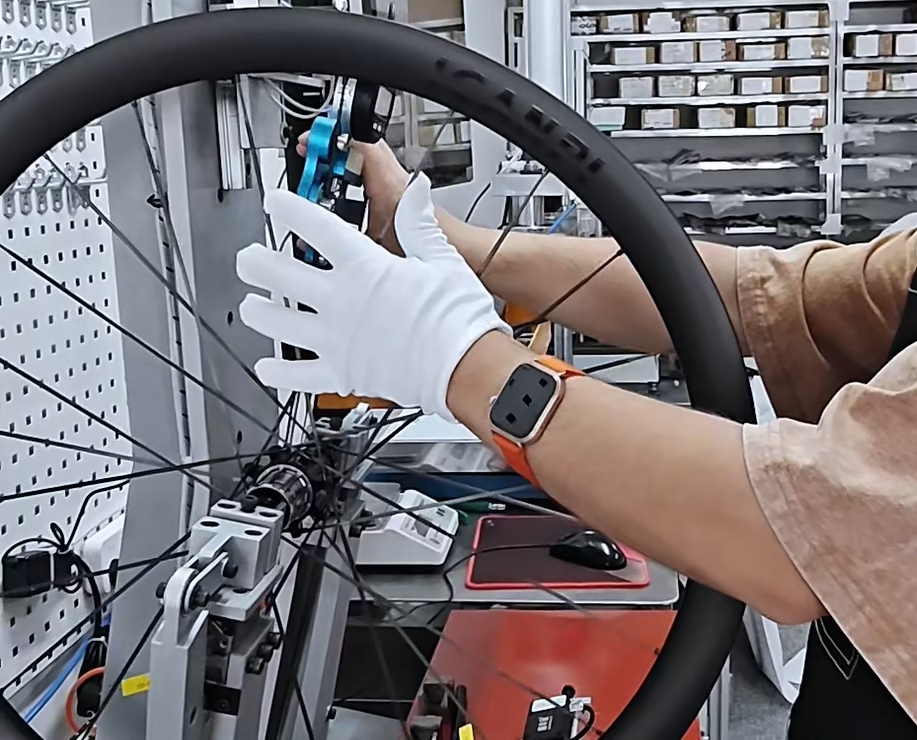
But we do not stop. Our builders place the wheel back on the truing stand for the second phase of the protocol. We bring the tension back up to our strict target of 135 kgf on the drive side. We true the wheel again. We stress-relieve it a second time. We repeat this cycle until the tension drop-off is mathematically zero. When you unpack an ICANPI carbon spoke wheelset, the nipples are already perfectly bedded. The spokes are straight. No pinging. No detensioning. Ever.
Reinforcing the Anchor: Toray Carbon Layup Physics
High spoke tension is useless if the rim cannot support it. Standard carbon rims are made from a uniform layup of mid-modulus carbon fiber. If you tension a carbon spoke to 135 kgf on a standard rim, the high localized force will literally pull the nipple clean through the carbon wall. It shears the resin and cracks the fiber bed. To prevent this, we engineered a highly specific, high-modulus structural matrix at the spoke holes.
We combine Toray T700, T800, and T1000 carbon cloth in a strategic layup. Toray T700 provides the base impact toughness for the outer rim walls. T800 adds structural rigidity. But the magic happens at the spoke beds, where we interweave T1000 high-tensile carbon sheets. T1000 has a tensile strength of 6,370 MPa. This is nearly double the strength of standard carbon fibers. By reinforcing the nipple beds with this ultra-high-modulus material, we create a massively reinforced anchor point.
This hybrid layup allows our rims to handle extreme lateral spoke loads without deforming. We test these rims to destruction. While a standard carbon rim starts to show micro-cracking at 180 kgf of spoke tension, our reinforced beds easily withstand over 320 kgf before failure. This massive safety margin is why our wheels remain perfectly round under the most punishing road conditions. We build our rims to exceed the rigorous ISO 4210-6 structural integrity testing standards, ensuring absolute safety under maximum rider wattage.
Measuring Down to 0.235mm: The Role of Mahr Digital Dial Indicators
We do not build wheels by eye. We do not use cheap plastic gauges. We use high-precision German-made Mahr digital dial indicators. These instruments measure lateral and radial runout down to the micron. Our quality control standard is uncompromising: we demand a maximum lateral and radial runout of 0.235mm. If a wheel measures 0.24mm, it is rejected. It goes back to the stand.
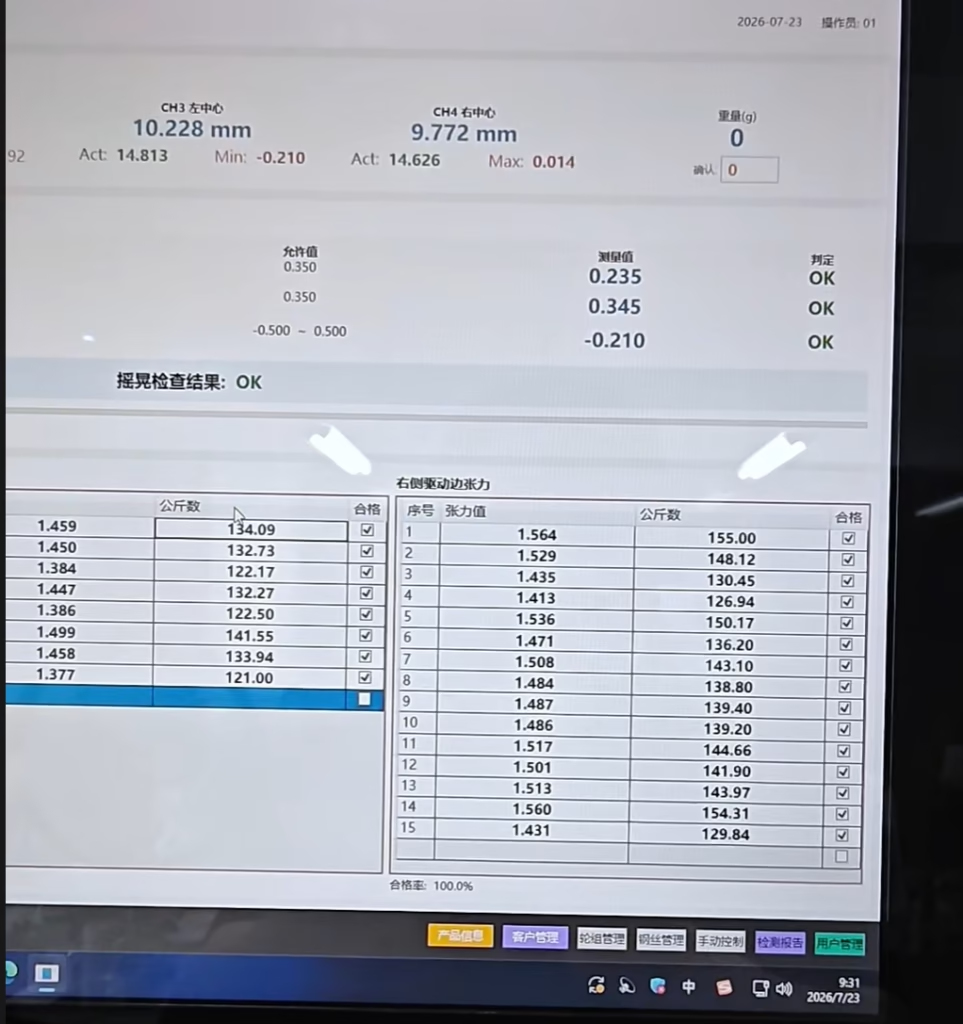
Why 0.235mm? Because at high speeds, micro-deviations matter. When you are descending a mountain pass at 50 mph, a wheel with poor runout creates micro-vibrations. These vibrations translate into brake rub, speed wobble, and wasted energy. By holding our wheels to a 0.235mm flatness and roundness tolerance, we guarantee dead-straight tracking. Your disc brakes will not rub. Your bike will track like it is on rails.
This level of precision requires human hands. Robots are excellent for building thousands of cheap, low-tension wheels. But a robot cannot feel the subtle resistance of a carbon spoke as it reaches maximum tension. A robot cannot sense the microscopic variations in carbon thickness at the rim joint. Our master builders combine 20 years of tactile experience with the cold, hard data of Mahr digital indicators. It is the only way to achieve true perfection.
FAQ
Q1: Do carbon spokes lose tension over time compared to steel spokes?
No. Steel wire stretches plastically over time under constant load. Carbon fiber does not stretch or fatigue in the same manner. Because of our Double-Tension Protocol, once the nipples are permanently seated in our factory, the ICANPI spokes hold their exact tension indefinitely. You do not need to worry about the spokes stretching or going soft over seasons of hard riding.
Q2: Is a 0.235mm flatness tolerance actually noticeable on the road?
Absolutely. When descending at 50mph, a wheel with poor runout creates micro-vibrations that cause brake rub and speed wobble. A 0.235mm tolerance ensures dead-straight tracking and flawless disc brake alignment. You will feel the difference in high-speed corners where lateral deflection is completely eliminated.
Q3: What exactly causes that metallic “ping” on a brand new wheelset?
Unseated nipples and twisted spokes. During assembly, tension causes the spoke to twist slightly. When you hit your first pothole, the spoke violently untwists, making that metallic pinging sound. Our mechanical stress-relief process forces this to happen on our machine in the factory, not on your ride. Your wheels arrive ready for peak performance.
Q4: Can the carbon rim actually handle the extreme tension required by carbon spokes?
Yes. Standard rims would crack under these loads. We engineer the ICANPI rim beds using a proprietary layup of Toray T700, T800, and T1000 carbon cloth. This creates a massively reinforced anchor point capable of withstanding extreme lateral spoke loads without any structural deformation or micro-cracking.
Q5: If I crash and break a carbon spoke, does the wheel lose its true permanently?
No. ICANPI uses threaded mechanical carbon spokes, not one-piece bonded trash. If you crash and break a spoke, your local mechanic simply unscrews the broken spoke, threads in a replacement, and re-tensions it back to factory spec. It is as serviceable as a traditional steel-spoked wheel.
Q6: Why do you still use 100% manual quality control instead of automated wheel-building robots?
Machines are great for building cheap training wheels fast. But only human hands combined with Mahr digital dial indicators can feel micro-inconsistencies in carbon spoke twist during the final tensioning phase. Wheel building is an art of managing microscopic physical variances that machines simply ignore.
Q7: Does maximizing lateral stiffness with high tension ruin the ride comfort?
No. You are confusing lateral stiffness with radial compliance. High spoke tension prevents the wheel from flexing side-to-side during a sprint, maximizing power transfer. However, the carbon layup of the rim and the carbon spokes themselves naturally dampen high-frequency vertical road buzz, giving you a smooth ride.
ICANPI series wheelsets deliver zero power loss, absolute tracking precision, and extreme out-of-the-box reliability. Please be sure to order your high-performance, exceptional full carbon ICANPI wheelset directly from the official ICANIAN website to ensure your 2-year warranty from the date of purchase.